Women are more inclined to tackle highly responsible tasks. They don’t avoid doing difficult, and often low-paying jobs, through which they cannot capitalize on fame and social power.
Despite the high number of women in these positions, they do not have the same privileges that men do, and they are more often exposed to criticism and stereotypes. At the same time, women are expected to be devoted to their families; to be great mothers, wives, sisters, or daughters. Such circumstances and expectations still exist amid the increase in femicide and domestic violence.
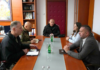
In Women’s History Month, when the issue of gender (in)equality is highlighted, women from civil society, the media, and the police discussed this burning topic in North Mitrovica.
A round table on women’s position in society was held there ahead of the 8th of March. It was organized by the KoSSev portal, within the „Etikonekt“ program of media cooperation between KoSSev, Goraždevac Radio, and Kim Radio.
Newsrooms (in Kosovo?) are dominated by women, and this fact served as a catalyst for the gathering of four female editors and media directors, who report in Albanian and Serbian: Besa Luci from „Kosovo 2.0“, Zorica Vorgučić from RTV Kim Radio, Jeta Xharra from „Kallxo“ and Mirjana Milutinović from Kontakt Plus radio.
Speaking about the position of female journalists, editors, and managers in the media, the introductory panelists agreed that there is an imbalance compared to men, but also that women face numerous other challenges.


Luci: Change the platform of violence, both women and men suffer in patriarchy
The editor of Kosovo 2.0 magazine, Besa Luci, emphasizes that the socio-political economic environment must be taken into account when it comes to the issue of gender equality.
Pointing out that while Kosovo society is largely patriarchal, she warned that it also builds expectations about the (expected) roles of both men and women.
„In other words, how they should behave and what that means in various professions,“ she said.
This is where the inequality is immediately felt, Luci adds, because the woman’s behavior is so much more scrutinized. When it comes to expectations and criticism, she emphasized that much more attention is paid to what women do and how they perform, compared to men.
„There are a large number of issues related to the behavior of women versus men. The women’s behaviour is always scrutinized, they are more exposed and there is a difference compared to men. A woman is expected to behave as per traditional gender roles. Especially in our professions, our behavior is especially monitored.“
Luci notes that, at the same time, women face much greater hate and violence, especially on social networks, and that the question should also be raised as to why women themselves avoid taking their rightful place in certain situations.
„There has always been hate speech, and today it is even more pronounced and accessible online. Criticism and hate speech, especially towards women who are more exposed, are spread much faster now. The question should also be asked why women themselves in certain situations avoid taking their place.“
Therefore, the inequality of the sexes, that is, the sensitivity of the role of women is visible through several elements – from management positions, income disparities, education, and the very treatment of women in society and public life, and her family obligations.
She emphasizes that, given that women are expected to have more and bear more responsibility in terms of family obligations, this must be taken into account, along with the need to remain professional in her work. According to Luci, the structures are regulated exclusively around men.
She listed one such example from her profession: „They call you at 6 p.m. to participate in the show scheduled for 8 p.m.“
Accordingly, addressing the inequality of the position of women and men in the media, she said that although many professions are dominated by female experts, including politics, mostly male guests appear in political shows on television.
She expressed her personal impression that she is often bothered by the violent, one-sided language and patriarchal atmosphere in these shows.
Therefore, it is important to re-organize television platforms as well as social networks.
„We should participate in those platforms, but make them less violent. I don’t want to be part of a violent, one-sided environment. There should be diversity in voices and opinions,“ said Luci.
While women are noticeably left out in these political debates, at the same time, she shared her impression that, on the other hand, it is women journalists who dominate when it comes to fieldwork during crises or when reporting about sensitive topics, including ethnic issues.
She added that women are more cautious with this type of reporting:
„Especially when we talk about the issue of reporting relations between Serbs and Albanians, political narratives between Serbia and Kosovo. Female journalists are braver in constructing a different perspective in the debate.“
The portal headed by Luci tackles topics of human rights and freedoms, with a special emphasis on marginalized and vulnerable groups. She says that there is a tendency to minimize the importance of citizen-centered reporting or reporting about discriminated groups or individuals.
„The more these groups or citizens are discriminated against, the more the community or individual who uses violence profits,“ she adds, noting that this is often associated with the notion of masculinity.
She also pointed out that women are not the only victims of patriarchy – men are as well.
„A lot is also expected of them. They are told what their part of the job is, that they can’t show emotions and so on,“ she said.
Xharra: Women need to take their place and cause an uproar
In contrast, a well-known Kosovo journalist Jeta Xharra believes that it is necessary to cause an uproar. She highlighted that women must take their place and that one should not humor the discourse of minimizing the level of discrimination against women, that is, succumbing to the pattern of normalized discrimination of women in work and society.
She pointed out that discrimination against women is ever-present in various professional spheres of Kosovo society, and that it is important for women to snap out of it and stand up for their rights. As an example, she cited situations in which management positions are held by men even when that institution or body is dominated by women, such as the media, or healthcare.
Xharra also referred to the RTK public service broadcaster, where Xharra worked as an editor and hosted her show „Life in Kosovo“ (Jeta në Kosovë), as „Men’s Television Kosovo“, precisely due to the dominance of male staff compared to women.
Although the situation has changed recently after about 50% of female experts were appointed to the governing body of this television, she nevertheless pointed to the regression of the situation in reality. For example, the competition was canceled when women successfully passed the hiring process for management positions in this media, or excuses were given that one of them could not perform her duties due to a possible conflict of interest because she was the wife of the Kosovo ambassador to Albania. The position in question was for the director of Radio Kosovo, but at the same time, the director of RTK is an individual who is a former financier of Self-Determination from abroad.
Moreover, Xharra pointed out that three women were rejected for management positions at RTK, even though they had the highest number of points in the public competition, and for each of them a ‘reasoning’ was found as to why they could not hire them and why they had to repeat the competitions.
Xharra also stated that different financial merit systems for women and men in the media for the same job, under trivial pretexts, are another problem.
However, when it comes to going on a work assignment to the north, then female journalists are sent without any problems, while male managers drink coffee, she added.
She also shared her own experience – her well-known show, which ran for years, was taken off the air by RTK three weeks after they presented the story of alleged corrupt business practices of one of the biggest businessmen in Kosovo. Moreover, she was presented with an offer that her male colleague could continue with the show. „You can’t, he can,“ they told her.
That’s why Xharra underscored the need to raise the voice of women, emphasizing at the same time the values that connect the women’s professional world:
„We are collaborative, we are more persistent, we are not corrupt,“ she said.
Vorgučić: Expertise, not gender quotas
The editor of Kim Radio, Zorica Vorgučić, shared a recent unpleasant experience she had when a representative of an international organization invited her to an event in Čaglavica that included a conversation with the Deputy Prime Minister of Kosovo, part of the invitation included the explanation that „they need one woman.“ She refused the invitation.
„I was in shock. That hasn’t happened to me yet. I refused to be a part of that panel, considering that I did not belong there, to speak, but to ask questions. I really felt offended. I
do not exist to fill someone’s quotas,“ she says.
However, at the same time, she was unpleasantly surprised by the fact that another panelist accepted the same invitation with the explanation that she was aware that women are invited to events for the purpose of meeting the gender quota.
Vorgučić, although an editor, spends most of her working time as a reporter from the field in Čaglavica, Gračanica, Pristina and the north. She recalled the bad experience she had on several occasions, including the violence carried out against her by other women.
In her words, female journalists in the field are brave and tough. She also described the employees of her newsroom, along with the director and another male editor, as „the main strength of the media“.
As the most drastic example of violence against female journalists, Vorgučić pointed out this week’s physical violence carried out by the security of the municipality of Indjija against a journalist from a local media outlet, Verica Marinčić, which was captured on camera. Marinčić was not allowed to follow the mayor’s media conference under the pretext that she did not have accreditation, and she was also forcibly removed from the municipal building and verbally insulted.
Vorgučić pointed out that one of the main problems in the work of local media from Kosovo that report in Serbian is precisely the lack of communication with institutions, both at the local and central level, citing as an example that the municipality where she lives and works is led by a female mayor, who, however, has a very selective approach to the media.
On the other hand, she highlighted the fact that Kosovo Prime Minister Albin Kurti has not yet given a single interview to the local media in Serbian.
Another problem for female journalists, as well as for other women in positions of responsibility, according to the editor of Kim Radio, is the difficulty of coordinating family and professional obligations – a point with which most of the interlocutors of this round table agreed. She, however, added:
„I chose this job, I love it.“
Milutinović: Women in Kosovo Serbian media are more careful, without inflammatory rhetoric, with a sensitivity for the audience
The director of Kontakt Plus radio, Mirjana Milutinović, points out the strength of female journalism, not only in endurance but also in the fact that female journalists are more careful, they take care not to use inflammatory rhetoric, above all, including situations when they report on sensitive topics and crisis situations.
She said that the media that report in Serbian from Kosovo do exercise caution in reporting, applying a professional attitude towards fact-checking and objective observation of events.
Milutinović noted that these are newsrooms dominated by women, adding that even if it is a coincidence:
„We have simply put our media in a position to be credible sources of information and sources used by Kosovo media and media from Serbia.“
Milutinović acknowledged her female colleagues who report from the field, pointing to the experiences of female journalists during the past year or two which were marked by one crisis after another when it comes to the north. As the most extreme example, she highlighted the reporting at the end of May last year after the installation of Albanian mayors in municipal buildings in the north.
She also highlighted that female journalists also dominated fieldwork assignments, reminding of the violence from that period, to which the media was particularly affected, but she also conveyed the impression of her colleagues.
„Almost all of them told me that after May they were no longer the same. Everyone’s lives have changed.“
She pointed out the specificity of local media that they „report and serve one community, of which they are a part“.
„Between Pristina and Belgrade. I also see the strength of female journalism there. A woman who has a sensitivity for the audience, above all to do her job professionally and share accurate information.“
Milutinović pointed out that she also noticed that the „last atoms of strength“ were being extracted due to the increase in the volume of work.
„Since we are going from one crisis to another and since female journalists are part of all of this when reporting, they are pulling out the last atoms of strength to do their job properly.“
In addition to reporting on daily events, which includes frequent reporting on crisis situations, she states that the burden is also represented by additional obligations – in the form of other programs and projects to which female journalists, editors, and directors in the media must also be committed, and which are often their sources of funding.
Adding that the work of female journalists in the field is a strength to the extent that it can also be defined as a „feat“, Milutinović admits that from such strength, weaknesses are born at the same time.
Due to an overload of obligations, private life suffers, and so does commitment to family, and management of multiple obligations, and the need to interrupt focus from one and transfer it to another obligation, causes stress.
Finally, Milutinović, who has been in charge of the local Kontakt Plus radio station for 20 years, while she has been involved in the media for even longer, testifies that she does not even think about how men would perform their duties.
„Probably easier, they would probably have more time. Probably, the period after 5 o’clock, which is problematic for me to work, when I devote myself to home and family, rest sometimes, would be easier for men.“
Nunan: Women do better in areas when they take care of others
Marijana Pantić Nunan, a volunteer of the animal protection association „Šapa“, pointed out that women are better in areas where they take care of others, where they „give themselves for the sake of others“.
„I think that women are more successful there, in areas that are difficult, painful, these are not jobs for men, these are the places where women shine. Providing help in the best moments,“ she added.
The “Šapa” volunteer association that Nunan founded and manages is a perfect example of this. It only has female volunteers, who carry out back-breaking labor and are exposed to stress daily as they rescue dogs, all while facing prejudices and misunderstanding of the people around them. What pushes them forward is precisely their empathy and love for vulnerable animals.
She linked her association with the media because both jobs involve the provision of services.
Nunan confirms the obvious discrimination against women in all spheres but also indicates that women themselves unconsciously fall under the pattern of patriarchy.
„What is even worse than discrimination is accepting discrimination, and I think we do it unconsciously because patriarchy is the only thing we know. Did we once live in a different world? It is very difficult to get out of it,“ she explained.
As an example, she cited the very opening part of the debate, in which women felt the need to stress that they were persistent, brave, and meticulous, while men, on the other hand, would only say: „We are here because we are better.“
„That’s why I want you to get rid of what the patriarchy has instilled in you to make excuses, and apologize because you’re better. You’re better, that’s why you’re where you are,“ Nunan pointed out.
Simić: The fight against violence requires an integrated approach – all together
Women’s rights activist Ružica Simić does not agree with the assessment that jobs can be divided by gender, citing her own example of several positions and jobs she performed – from the head of the Red Cross during the war years, to the president of the court. She believes that she performed both jobs equally successfully during times of crisis.
However, she notices the stereotype of jobs that are considered to be “man’s jobs” – managerial positions, where she was not accepted by some of her colleagues.
She notes that the issue of gender equality has been neglected in the media due to a high political agenda that dictates the media, adding that society also lacks schooling on the issue.
Simić criticized the media, that is, the editors, for their “lack of interest” in monitoring domestic violence, pointing out the need for an integrated approach in the fight against gender-based and domestic violence, which requires the participation of multiple institutions.
Coordination and joint efforts are needed, she added.
„Because it really hurts me, it hurts my soul to know what the victims of violence are going through. It is not only the police who make decisions on this. Unfortunately, the police come only when violence rises. The woman suffers, suffers, and when he slaps her, when he breaks her arm, then she has to go to the doctor.“
Mulliqi: The real strength of women in society can be seen in how prominent domestic violence is
A member of the Kosovo Police of the region north, who has been dealing with the issue of domestic violence for decades, Teuta Mulliqi, emphasizes that, although she really liked the fact that the strength of a woman in society has been highlighted, on the other hand, she knows that this strength is actually observed in the department which she manages.
„When a woman breaks the ice and reports domestic violence. I have never recorded a single case of the first instances of violence. Each of the women had one cycle of violence until she reached the breaking point and came to the police to report the case,“ says Mulliqi.
Moreover, she points out that family violence is also very frequent in the north, presenting data for the last three years.
„From November 2022, until March of this year, 78 cases of domestic violence were reported at the regional level, which is a very high number for a small area, but I fear there is a large number of unreported cases because of everything that happened in the north. Most of the victims, women and children, do not have the strength and courage to come and file a report with the police.“
Of the reported number, 99% of cases were reported by women.
Women are the prevalent victims of domestic violence, Mulliqi concurs. She added that in many cases the woman is not economically independent, she has no property, and thus she actually returns to the cycle of violence that is getting stronger.
Due to the rise in the rate of femicide in Kosovo, Mulliqi claims that they have now resorted to much stricter court measures to protect women, namely, restraining orders against abusers.
„We were forced to improve the implementation of the law in practice and tighten up things a little,“ she said.
This policewoman appealed to the media for increased cooperation in the fight against domestic violence, stressing that the weakest suffer – primarily children and women. She points out that the role of the media is also crucial, as through their reporting they can influence the increase of awareness that people should not be silent about domestic violence.
Aljević: The laws are good, but they are not implemented
The youngest participant, an activist in the NGO ACDC, says that before holding anyone accountable, the law itself should be implemented.
„Kosovo’s laws are quite good on paper, but they are not implemented,“ she says.
Although the Law on Labor and Equality foresees a quota of 50% of women in workplaces, in practice this quota is significantly lower.
Moreover, even in those cases when women hold managerial or representative positions, they are often appointed to meet the gender quota, and not based on their qualifications, she warned.
Aljević also highlighted her own example of attitudes towards mothers, where the law itself is flawed.
She points out that female employees in the non-governmental sector who become mothers, who need paid maternity leave to care for their babies, were not taken into account by the law.
Aljević is a young mother of two children, and due to this legal (dis)regulation, she depended on the „free will“ of the executive director as to whether she would receive a salary or not after giving birth and being unable to work. Although she added that her supervisor was empathetic, she also pointed out that he could not have done anything differently but to return her to work after a short leave, i.e. to perform work tasks from home or terminate her employment.
She particularly accentuated the economic independence of women as crucial for her strength, but also the need to work on it from the early days of a girl’s childhood through upbringing.
The roundtable participants also declared that work with children on gender equality should be carried out with both male and female children.
Also, one of the key messages of this meeting read:
The time for quota is over, we need substance
Preuzimanje i objavljivanje tekstova sa portala KoSSev nije dozvoljeno bez navođenja izvora. Hvala na poštovanju etike novinarske profesije.