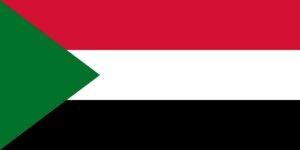
Sudan has officially recognized the independence of Kosovo, Kosovo’s President Vjosa Osmani announced on Saturday, following a meeting with Sudanese Foreign Minister Youssef al-Sharif on the sidelines of the Antalya Diplomacy Forum in Turkey. The decision marks a significant diplomatic win for Kosovo and comes amid political unrest and a mass rally in Belgrade.
“It was an honor and a pleasure to meet with the minister of foreign affairs of Sudan. Our first meeting, where he informed me of the instructions of the President of Sudan to recognize the Republic of Kosovo, and then to establish diplomatic relations between our two countries,” Osmani said in a video statement posted on X (formerly Twitter). “I thank you from the bottom of my heart on behalf of the people of Kosovo.”
Al-Sharif echoed the sentiment, praising the decision and extending his gratitude to Turkish President Recep Tayyip Erdoğan for hosting the forum.
“I’m honored to be here on behalf of my country’s president. After a fruitful meeting with President Erdoğan, which we saw as a good omen, we decided to recognize your beautiful country. On behalf of the peace-loving people of Sudan, I offer great respect to your state as a new member of the international community,” he said.
Despite its ongoing civil conflict, Sudan sees Kosovo as a potential partner, Al-Sharif added. He emphasized that the two countries could benefit from strong bilateral cooperation, including official visits and collaboration across various sectors.
The development comes just two weeks after Kenya announced its recognition of Kosovo—an important shift after years of stagnation in Kosovo’s diplomatic campaign.
According to Kosovo officials, Sudan is now the 119th country to recognize Kosovo, though Serbian officials continue to dispute that number, maintaining that it remains below 100 following a string of withdrawals orchestrated by Serbia’s diplomatic efforts under former foreign minister Ivica Dačić.
Belgrade Rally Overshadowed
While Osmani was announcing the diplomatic breakthrough in Turkey, Serbian President Aleksandar Vučić was addressing a large rally in Belgrade organized by the ruling Serbian Progressive Party (SNS). The rally was seen as an attempt to consolidate support amid months of anti-government protests and growing domestic challenges. A number of ethnic Serbs from Kosovo were reportedly brought to Belgrade to attend the event.
Vučić had previously hinted at a renewed diplomatic push in Africa after Kenya’s recognition of Kosovo, promising „new surprises.“ His close ally and current acting foreign minister, Marko Đurić, has been actively promoting ties with African nations, including Sudan.
Less than ten days ago, Đurić boasted of a phone call with Al-Sharif, during which the two discussed strengthening cooperation in trade and education and possibly celebrating the 70th anniversary of diplomatic relations between Serbia and Sudan next year.
Erdoğan’s Influence
Both Osmani and Al-Sharif thanked President Erdoğan for facilitating the meeting and playing a behind-the-scenes role. Osmani, in a statement a day earlier, had already underscored Turkey’s influence in facilitating diplomatic openings— at the time hinting at Ankara’s involvement in bringing closer Kosovo and Syria.
Erdoğan, whom Vučić has frequently referred to as both a personal friend and a friend of Serbia, appears to be emerging as a crucial mediator in Balkan and regional diplomacy.
Kosovo Officials Welcome Sudan’s Recognition with Praise
Sudan’s recognition of Kosovo has sparked a wave of congratulations among Kosovo’s political leaders, who hailed the move as a crucial step in strengthening the country’s international standing.
Outgoing Prime Minister Albin Kurti welcomed the decision, thanking Sudan’s president and congratulating the people of Kosovo. He also expressed gratitude to Kosovo’s President Vjosa Osmani for her “dedication,” and to “our friends and partners for their continued support.”
Kosovo’s acting Foreign Minister Donika Gërvalla echoed the sentiment, saying that Sudan’s recognition—coming shortly after Kenya’s—further solidifies Kosovo’s diplomatic presence and “international subjectivity in Africa and beyond.”
She extended her thanks not only to Sudan, but also to President Osmani and Kosovo’s “allies,” crediting them with contributing to what she called a shared diplomatic success.
Former foreign minister and leader of the Alliance for a New Kosovo (AKR), Behgjet Pacolli, also welcomed the news. Over the years, Pacolli had repeatedly hinted at upcoming recognitions, particularly from African countries. He played a key role in Kosovo’s recent recognition by Kenya, a fact acknowledged by both Kurti and Osmani.
“As we predicted, Kenya’s recognition as one of Africa’s most influential nations is encouraging a wave of recognitions for our country. The recognition from Sudan is fantastic news,” Pacolli said, also thanking Osmani for “the work done in Antalya.”
Ramush Haradinaj, leader of the opposition Alliance for the Future of Kosovo (AAK), described Sudan’s decision as a vital development in Kosovo’s statehood efforts.
“The Presidency has a mandate to strengthen Kosovo’s international subjectivity. This momentum must continue at a swift pace,” he stated.
Kosovo’s opposition party, the Democratic League of Kosovo (LDK), also welcomed the announcement, calling it a “significant moment for Kosovo’s diplomacy” that reflects mutual trust in the principles of peace, stability, and international cooperation.
In a joint statement, the party described the recognition as “the beginning of a new chapter, born from the tireless efforts of Kosovo’s international friends.”
Sudan’s Fragile Context
Sudan’s recognition comes as the country grapples with a devastating internal conflict between the army and paramilitary forces. The war, now in its second year, has resulted in more than 20,000 deaths and has pushed nearly half of the country’s 50 million people toward extreme hunger.
Preuzimanje i objavljivanje tekstova sa portala KoSSev nije dozvoljeno bez navođenja izvora. Hvala na poštovanju etike novinarske profesije.