An authentic television interview with retired Serbian security official Zoran Stijović has been used as the basis for a video spreading rapidly among social media users in Kosovo since this morning. A voice presented as Stijović’s was added to the original footage, attributing to him statements about Adem Jashari, Zahir Pajaziti, Hashim Thaçi and war crimes following the Hague verdict – statements which, he says, he never made.
A veteran of the security service
Stijović is a former long-serving operative of Serbia’s State Security Service who became widely known to the public through his earlier accounts of the work of the security services. As early as 2006, speaking to Insajder on TV B92, he discussed the work of State Security in Kosovo and the concealment of information concerning events that preceded the escalation of the conflict in the late 1990s.
Two years later, he was one of the key interlocutors in Insajder’s 2008 series Official Secret (Službena tajna), which examined the work and abuses of the state security services.
Stijović also appeared as a witness before the International Criminal Tribunal for the former Yugoslavia.
At Slobodan Milošević’s trial in 2002, he testified about a statement made by former State Security chief Radomir Marković, which also concerned allegations of efforts to conceal evidence of crimes committed in Kosovo. Stijović himself had questioned Marković for several months while he was held in Belgrade’s District Prison.
He later testified in the case against Ramush Haradinaj, Idriz Balaj and Lahi Brahimaj, speaking about the way the security service collected and verified information in Kosovo, as well as about State Security’s knowledge of certain KLA structures.
Stijović was also among those who publicly raised questions about the way Serbian state institutions cooperated with the Hague Tribunal and provided documentation in cases involving the KLA.
After being called to testify against Ramush Haradinaj, he sought access to documents which, he maintained, existed within the security services, the Interior Ministry and the Prosecutor’s Office, in order to support his testimony with documentary evidence. According to claims made at the time, part of that material was not provided to the Tribunal.
He particularly pointed to the White Book on Albanian Terrorism and Organized Crime in Kosovo and Metohija, presented by Serbia’s Security Intelligence Agency, BIA, in 2003. Stijović claimed that a passage in that document stating that KLA units had not had significant coordination among themselves before October 1998 was used by Haradinaj’s defence as an important argument against the prosecution’s case concerning command responsibility.
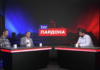
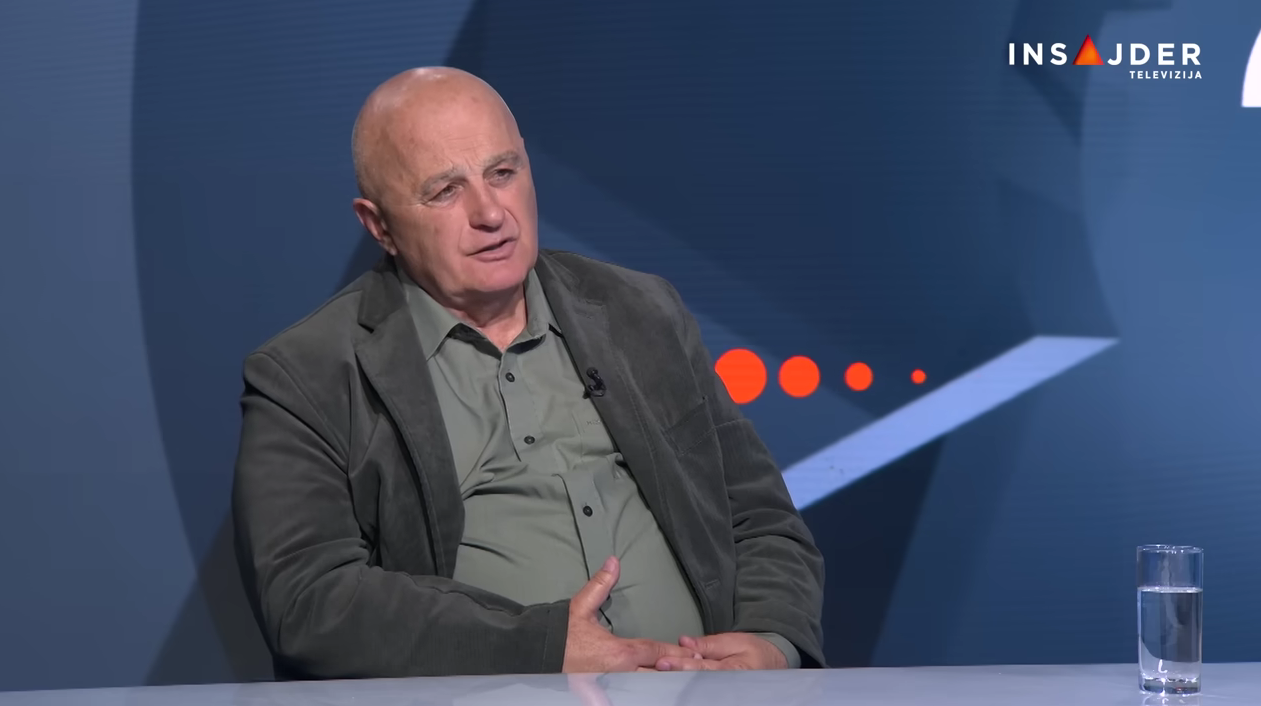
Almost two decades later, on May 20 this year, Stijović again appeared on Insajder Interview. Speaking with journalist Jugoslav Ćosić, he discussed the state of Serbia’s security apparatus, the politicisation of the services, the destruction and alteration of archives after October 5, the network of informants, as well as the Senjak case following which then-Belgrade police chief Veselin Milić was arrested.
It is footage from that interview that has now been used as the visual basis for the disputed video, circulated in Kosovo for an Albanian-speaking audience.
Manipulated video
Stijović contacted the KoSSev newsroom today and provided us with a statement regarding the video, saying that he intends to initiate proceedings before the competent authorities in Montenegro and Pristina over its production and dissemination.
The disputed video was posted on a Facebook profile under the name “Mentor Gecaj” and had accumulated more than 104,000 views by this afternoon.
The footage used comes from Stijović’s May 20, 2026 appearance on Insajder Interview, where he spoke with journalist Jugoslav Ćosić about the Senjak case, the role of then-Belgrade police chief Veselin Milić and the functioning of Serbia’s security structures.
However, a voice was added to the footage attributing entirely different statements to Stijović.
Among other things, the manipulated audio claims that Adem Jashari and Zahir Pajaziti are today regarded as heroes in Kosovo, but that while they were alive, “Albanians were lining up to speak against them” in Stijović’s office.
He is then made to appear to say that “Albanians were the easiest to recruit,” that Hashim Thaçi and the others “were convicted over 97 victims, 80 of whom were Serbs,” and that “Albanians testified about Serbian victims.”
Stijović says he never made any of these statements.
“In the published video, my voice has been altered and Albanian-language content has been added, attributing to me statements that I never made. I particularly emphasise that I never made the alleged comments about Hashim Thaçi and other persons that are being presented as my words,” he said in the statement submitted to KoSSev.
The figure cited in the manipulated video does not match the verdict
One of the key numerical claims attributed to Stijović also does not correspond to the verdict.
On September 16, the Kosovo Specialist Chambers in The Hague, in a first-instance judgment, found Hashim Thaçi, Kadri Veseli, Rexhep Selimi and Jakup Krasniqi guilty of war crimes involving the arbitrary detention of 385 persons, cruel treatment of 49, torture of 303 and the murder of 96 persons.
Thaçi and Krasniqi were sentenced to 25 years in prison each, Veseli to 18 years and Selimi to 13.
They were acquitted of crimes against humanity because the Prosecution had not proven the existence of a widespread or systematic attack against a civilian population.
The official summary of the judgment does not state that “80 of the victims were Serbs,” as claimed in the manipulated video.
The Court said that the targets of the common criminal purpose included people considered opponents of the KLA’s political and military objectives – among them Kosovo Albanians associated with the LDK and FARK, people perceived as collaborating with Serbian or Yugoslav authorities, as well as certain members of minority communities, including Roma and Serbs.
Video emerges amid mobilisation following the verdict
The disputed video appeared amid intense public mobilisation in Kosovo that has continued since the September 16 verdict.
Since then, protests against the Specialist Chambers’ decision have been held almost daily, accompanied by messages of support for former KLA leaders, the display of KLA flags and strong mobilisation across social media.
Stijović, however, explicitly rejects attributing responsibility for the manipulated video to any people or community.
He also says that he has his own view of the judgment against Thaçi and the other defendants, but that he will not make it public until he has read the judgment in full.
“When it comes to the judgment against Hashim Thaçi and the other defendants, I have my own personal view, shaped both by my professional experience and by my life in Kosovo and Metohija. However, precisely because of the seriousness of these proceedings and out of respect for the Court, I will not publicly express that view before I have read the judgment in full and familiarised myself with its reasoning,” he said.
“I am not asking anyone to agree with my views or to spare me criticism. I am asking only that words I never said not be attributed to me and that my image and voice not be misused to create a false picture of me,” Stijović said.
He announced that he would seek to establish the origin and authorship of the video, as well as responsibility for its production, publication and further dissemination.
We reproduce Zoran Stijović’s statement in full below:
Early this morning, at around 3 a.m., I was informed from Kosovo and Metohija about a video published on the social network Facebook, on the profile Mentor Gecaj, which attracted considerable public attention within a very short period of time.
It is an edited recording of my appearance on the programme Insajder, an interview conducted by journalist Jugoslav Ćosić on May 20, 2026. In that programme, I spoke about the killing in Senjak, the role of Veselin Milić and the work of Serbia’s security institutions.
In the published video, my voice has been altered and Albanian-language content has been added, attributing to me statements that I never made. I particularly emphasise that I never made the alleged comments about Hashim Thaçi and other persons that are being presented as my words.
The technique of manipulating information is not unfamiliar to me, particularly when authentic recordings and statements are used to create a completely different picture of a person and his views. Precisely because of my professional experience, I believe it is necessary in this case to clearly explain to the Albanian public the difference between an authentic public appearance and content that was subsequently falsified.
When it comes to the judgment against Hashim Thaçi and the other defendants, I have my own personal view, shaped both by my professional experience and by my life in Kosovo and Metohija. However, precisely because of the seriousness of these proceedings and out of respect for the Court, I will not publicly express that view before I have read the judgment in full and familiarised myself with its reasoning. I consider this to be the minimum level of responsibility owed both to the judicial proceedings and to the public.
Everyone has the right to criticise, challenge or argue against my public appearances and the views I have expressed. That is an integral part of freedom of public expression. However, falsifying statements and presenting them as authentic has nothing to do with freedom of expression.
It is additionally concerning that, within a very short period of time, the disputed video received tens of thousands of views and prompted numerous negative comments.
I particularly wish to point out that another video was published on the same profile showing physical violence, accompanied by a comment in Albanian that can be translated as: “Blessed be those hands, kill the spy.”
I do not wish to prejudge whom that comment was directed at, nor do I wish to make unverified claims about any connection between these posts. Nevertheless, their proximity in time and their content constitute grounds for serious concern and require appropriate verification.
For all of these reasons, and in accordance with the law, I will initiate the appropriate proceedings before the competent judicial authorities, both through the High-Tech Crime Department of the Police Administration of Montenegro and before the competent authorities in Pristina, in order to establish the origin and author of the disputed video, as well as responsibility for its publication and dissemination.
Once the competent authorities have conducted their proceedings and established the relevant facts, I will decide on further steps on the basis of their findings.
I wish to emphasise in particular that I do not associate this case with any people or community. I do not accept collective responsibility, nor do I wish my response to contribute to interethnic tensions.
Responsibility for any unlawful conduct must be individual and established on the basis of facts.
During my professional career, I had the opportunity to deal with highly complex security and political issues. I have always believed that such matters must be discussed responsibly, even where views differ or are directly opposed. I expect the same from others.
I am not asking anyone to agree with my views or to spare me criticism. I am asking only that words I never said not be attributed to me and that my image and voice not be misused to create a false picture of me.
Truth may be challenged with arguments, but it must not be falsified.
P.S. Given the content and the manner in which the video was edited, as well as the political and social context in which it was published, I believe it would be irresponsible to draw conclusions in advance about the motives of those involved or about their possible affiliation with any nationality, political organisation or other group.
I do not rule out the possibility that the publication of such content may also have a broader political context, including political developments and the upcoming elections in Serbia. However, I have no evidence for such assumptions and do not wish to present them as facts.
I therefore expect the competent authorities to conduct a professional, impartial and comprehensive investigation covering all circumstances, including the origin of the video, the way it was produced and distributed, the identity of those responsible and possible motives.
I particularly emphasise that I do not attribute responsibility for this event to any people or community. Any potentially unlawful conduct must be established on the basis of evidence, regardless of the nationality, political orientation or place of activity of those responsible.
Preuzimanje i objavljivanje tekstova sa portala KoSSev nije dozvoljeno bez navođenja izvora. Hvala na poštovanju etike novinarske profesije.