The Peaceful Change Initiative (PCI) presented the 2022 Media Awards today. One of this year’s winners was Nevenka Medic, Director of the KoSSev Portal. The 500 euro award will be donated to the Savic family, with eight children and a ninth on the way, whose father is seriously ill, from the village of Koretiste.
The Peaceful Change Initiative award is part of the project ‘Amplifying Local Voices for Equitable Development’ – supported by the UK’s Conflict, Stability and Security Fund.
The awards were given on the basis of two competitions – for media reporting in Serbian and Albanian. The decision was also made by two panels of judges – one in Belgrade and the other in Pristina.
The panel in Belgrade was comprised of Jelena Obucina, Tamara Skrozza and Milivoje Mihajlovic. The one in Pristina of Violeta Hyseni Kelmendi, Violeta Oroshi and Dr. Ismet Hajdari.
The awards were given in two categories – journalistic writing and audio-video form.
The first prize in Belgrade was awarded to RTK2 journalists Žarko Joksimović and Ersin Shamli for the documentary film „The Filigree Bridge.“
At this regional media competition, Nevenka Medic won 2nd place in the audio-visual category for her reportage about the life of Serbs in Cernica, a multi-ethnic village near Gnjilane.
The first prize in written journalism in Belgrade went to journalist Ilir Gashi for the story „Alternative Postal System in the Balkans“, while the second prize went to Vojkan Ristić for the text „The 6,000 Person Village that All of Serbia Wants to Hear From.“ In Belgrade, the third prize was not awarded this year, with the explanation that most of the topics concerned daily political events.
The reportage was produced as part of the „Howdy, neighbor?“ series, made with the support of UNMIK.
This was the first of eight reportages in this series which were produced last year, each dealing with the life of minority communities in Kosovo.
The award ceremonies were also held simultaneously in two cities – in the Belgrade Media Center, and the „Dit’e’Nat“ cafe/library in Pristina.
In 2022, with the support of UNMIK, KoSSev visited the Serb, Albanian, Bosniak, Roma, and Gorani communities throughout Kosovo, and reported about their lives.
The award-winning reportage focused on the life of the minority Serb community in Cernica.
The Serbs in this village near Gnjilane bear deep scars from the first years of the war, when many civilians, including children, were murdered. Today, they try to maintain good relations with their Albanian neighbors.
Medic said that the “Howdy, neighbor” series aimed to bear witness to the life of communities in Kosovo.
„Through these eight reportages, we have shown that there are communities in Kosovo society that still live with majority communities, even near the majority Albanian community. Through our series, we also dealt with the life of Albanians in two places in Zvecan – Lipa and Zaz,“ said Medic.
She explained that she was the original creator of the series and the organizer and that three media teams worked on the reportages. Milena Maksimovic and the cameramen Nikola Milosavljevic and Vladislav Cup from the Gracanicaonline portal worked together on the story about Cernica.
Medic revealed that she will be donating the 500 euro award to the Savic family from the village of Koretiste in Kosovsko Pomoravlje.
The family is expecting their ninth child but is facing financial problems, especially because the head of the family has brain cancer.
The award ceremony was also attended by Milena Maksimovic, who, in addition to Cernica, produced three out of a total of eight reportages.
Maksimovic said that the story about life in Cernica is difficult because it speaks about the victims, while at the same time exuding positivism. She added that the story sends a wonderful message but also a lesson about life and coexistence in Kosovo.
„You see Lazar who lost his four-year-old brother, however, Lazar decided to stay in Cernica. He says that he will get married there and that he is looking forward to it. You have a school that doesn’t really look like a school, and only once you step inside do you see that there is one student, one teacher and the principal. He enthusiastically talks about their successes and says that you will not find one teacher who pays so much attention to one child anywhere else in the world,“ Maksimovic said.

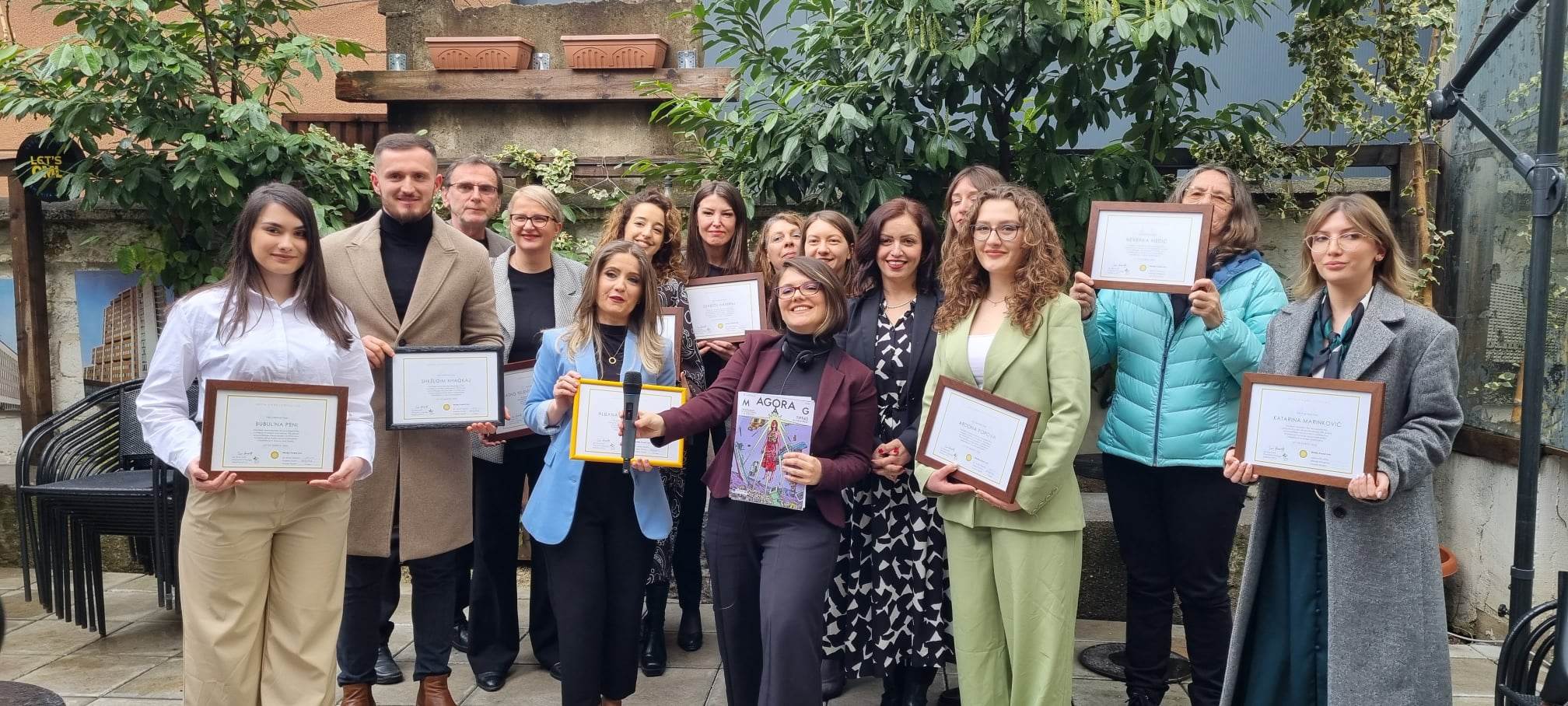
Media crews and journalists who reported on the life of Albanians in the south of Serbia, as well as Serbs in Kosovo, the life of the Roma community, the coexistence of Serbs and Albanians in Kamenica and multi-ethnic marriages, were awarded in Pristina.
Katarina Marinkovic from Media Center Caglavica won third place in Pristina for her story about multi-ethnic marriages, while her colleague from RTK2, Zarko Joksimovic, won an award in Belgrade.
Pristina: First place award for a story about the Decani Monastery – as a refuge for Albanian refugees during the war
The first place, but in the journalistic writing category, went to Balkan Insight journalists Milica Stojanovic from Belgrade and Serbeze Haxhiaj from Pristina for their story about how the Visoki Decani monastery served as a refuge for Albanian refugees during the war.
Preuzimanje i objavljivanje tekstova sa portala KoSSev nije dozvoljeno bez navođenja izvora. Hvala na poštovanju etike novinarske profesije.