Serbian and Albanian are the official languages of Kosovo, supported by the Law on the Use of Languages and Kosovo’s Constitution, which incorporates the Ahtisaari package—a framework designed to protect the Serbian community.
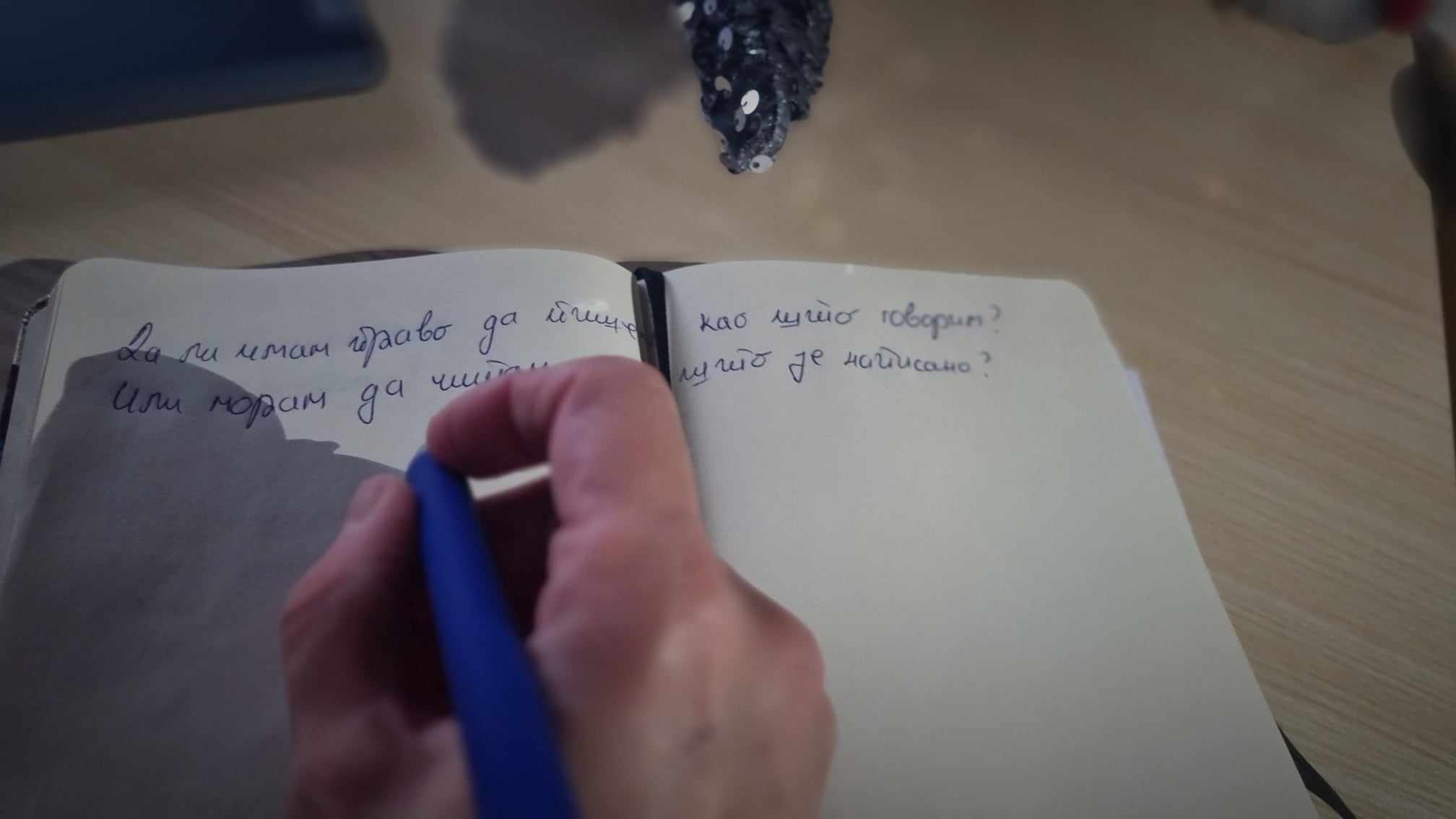
While this legal framework is often praised for its robust protections, the practical reality reveals significant gaps in its implementation, with notable deviations from the Constitution and laws.
Reports from international organizations, including the European Commission and the Council of Europe, highlight the inconsistent enforcement of language laws meant to guarantee Serbian-language use in institutions. Some findings underscore the limited use of Serbian in public institutions, creating barriers for Serbian citizens to access essential services.
Serbian officials, activists, and journalists frequently report challenges in using the Serbian language across various sectors, including administration (notably in the police and judiciary), political participation, and media work. Numerous accounts describe situations where official documents and information are available only in Albanian. Testimonies suggest that violations of language rights are a regular occurrence in many aspects of daily life.
Common grievances include difficulties Serbian citizens face when communicating with institutions, as well as the lack of educational materials and information in Serbian. Even when translations are provided, they are often delayed and riddled with inaccuracies.
Many Serbs in Kosovo express deep concern about the marginalization of their native language and the Cyrillic script. The removal of Cyrillic and the diminished status of Serbian are evident in the policies of Kosovo’s central and local authorities. In parts of society and the media, disdain for the Cyrillic script and the Serbian language is increasingly visible, often framing them as hostile symbols.
Legal Framework
The Kosovo Constitution and the Law on the Use of Languages guarantee equal status for Serbian and Albanian as official languages, requiring institutions to provide documents in both languages and ensure professional translation at events. Mechanisms like the Language Commissioner and support networks were established to monitor and enforce compliance, including penalties for violations.
The law also recognizes other minority languages spoken by at least 3% of a municipality’s population, mandating services in these languages upon request.
In practice, implementation falls short. Segregated education systems prevent Albanian and Serbian communities from learning each other’s languages, and violations of language rights are frequent. Serbian and minority languages often face marginalization.
What Do the Reports Say
Reports from various institutions and organizations highlight persistent violations of language rights in Kosovo, particularly for Serbian and other minority communities.
The European Commission’s 2023 report cites discrimination against the right to use official languages, affecting access to employment, education, social services, and healthcare. Media in Serbian struggle with institutional non-compliance, while courts face challenges in providing Serbian translations due to a shortage of translators. Higher education programs in minority languages also face difficulties in securing accreditation due to a lack of qualified staff.
The U.S. State Department’s 2023 report confirms issues such as poor or missing translations in laws, court proceedings, and public signage. Government efforts to address these problems remain inconsistent. Similarly, Kosovo’s Ombudsman noted frequent complaints about violations of the Law on the Use of Languages and provided reports riddled with language errors themselves.
Civil society research emphasizes systemic violations of language rights for Serbs and other minorities, stemming from a lack of political will to address institutional shortcomings. Organizations like AKTIV have highlighted that ongoing political crises, particularly in northern Kosovo, have sidelined discussions on minority rights, including language rights, in favor of addressing immediate crises.
Language Rights Violations: A Deliberate Act of Discrimination or a Result of Legal and Resource Gaps?
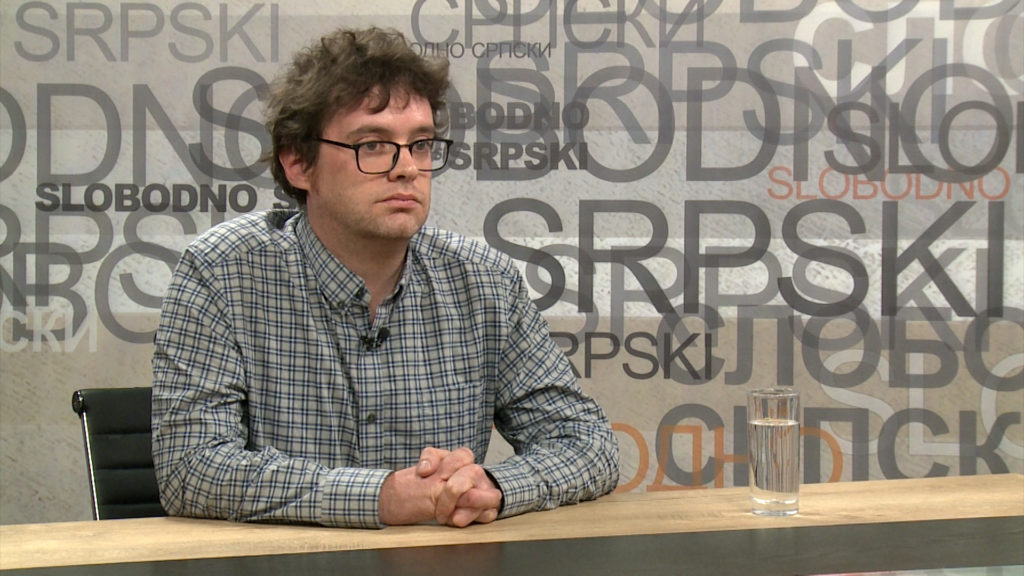
Caleb Waugh, a U.S. researcher and civil activist residing in northern Kosovo, highlights the worsening state of language rights in Kosovo. According to Waugh, violations of the Law on the Use of Languages fall into two categories: (1) due to a lack of resources or institutional awareness and (2) deliberate acts of discrimination.
FOTO: Medija centar
He observes increasing cases of the latter, such as municipal staff in Mitrovica refusing services in Serbian and poor-quality Serbian translations in official documents, including census forms with glaring errors. He also reports incidents where Kosovo Police officers communicate solely in Albanian, a practice perceived as intentional provocation.
Waugh recounts personal experiences of hostility, such as being told by a Kosovo Police officer to „not speak Serbian in Kosovo.“ He attributes the decline in language rights to deteriorating interethnic relations and the nationalist rhetoric of Albin Kurti’s government.
While acknowledging isolated efforts by individual officials to ensure fairness for Serbian speakers, Waugh concludes that the overall situation has significantly worsened in recent years.
The conversation with this researcher took place at the beginning of the year, while he was engaged as a researcher at the NGO Aktiv.
Kurti: Strengthening Minority Rights and Languages Aligns with the Environment We’ve Created
Kosovo’s Prime Minister Albin Kurti offers a contrasting perspective on the situation regarding the use of the Serbian language. While acknowledging challenges, he highlights improvements under his government, such as the introduction of Serbian translations in the Kosovo Assembly and government meetings, as well as press releases from the Prime Minister’s office being published in both official languages.
In a speech at the launch of the Council of Europe’s project „Fostering Social Cohesion by Reinforcing Minority Rights and Languages in Kosovo,“ Kurti argued that his government had created an environment conducive to strengthening minority rights, including the Serbian language. He also announced that the budget for the Office of the Language Commissioner had been tripled and plans to establish an Office for Language Control and Harmonization, with a focus on increasing Serbian language translators.
While he highlighted these accomplishments, Kurti acknowledged that challenges remain, particularly as the bilingual generation retires, resulting in a loss of translation capacity between Albanian and Serbian. Kurti, who speaks Serbian fluently, delivered parts of his speech in Serbian, a gesture often cited by international circles as evidence of Kosovo’s commitment to respecting language rights.
Marginalization of the Serbian Language in the Official Representation of Institutions
The Serbian language is marginalized in the official communication of Kosovo’s institutions, despite some improvements over the years. The Serbian versions of institutional websites are often poorly translated, incomplete, outdated, or contain grammatical and spelling errors. In some cases, entire institutions, such as NLB Bank, do not offer Serbian content at all. Social media pages of Kosovo’s institutions also primarily feature content in Albanian, with minimal or no Serbian language presence.
Examples of this issue even include the Kosovo Press Council and the Ombudsperson’s Office, where content in Serbian is of low quality or non-existent, despite the involvement of Serbian staff members. Even official sites, such as those of the Ministry for Communities and Return, have discrepancies, such as incorrect use of Cyrillic script and inconsistent translations. Additionally, some services, like reporting a case on the Ombudsperson’s website, contain untranslated terms and errors.
1 od 3
While Kosovo’s government and the president’s office offer better services in Serbian, especially in press releases, the overall situation is still far from ideal. The Serbian language is underrepresented and often poorly maintained in official communication across various institutions.
Beneath the Tip of the Iceberg
The issue of the lack of information in Serbian and the use of grammatically incorrect Serbian language in institutional websites and media presentations is just the surface of a much deeper problem. This issue has been evident for years, particularly in terms of access to public services for citizens. Institutions lack sufficient Serbian-speaking staff and translators, leading to discrimination, difficulties in accessing basic services, and growing insecurity within minority communities, which further deepens mistrust in Kosovo’s institutions.
The Chinese Whispers Game
The judiciary is one of the most sensitive areas.
The lack of proper translations or poor-quality translations continues to be a problem, especially concerning numerous laws, public institution signage, and communication in legal procedures. Courts often fail to provide adequate translation services for defendants and witnesses from minority groups and do not ensure proper translation of statutes and legal documents. The U.S. State Department’s 2023 Human Rights Report highlights the inconsistency of government efforts to address these issues.
Over the years, the KoSSev portal has frequently reported on delayed or canceled court hearings due to the unavailability or delay in receiving documents, files, and judgments in the appropriate language. This not only delays legal proceedings but also creates legal uncertainty for clients, lawyers, and even judges.
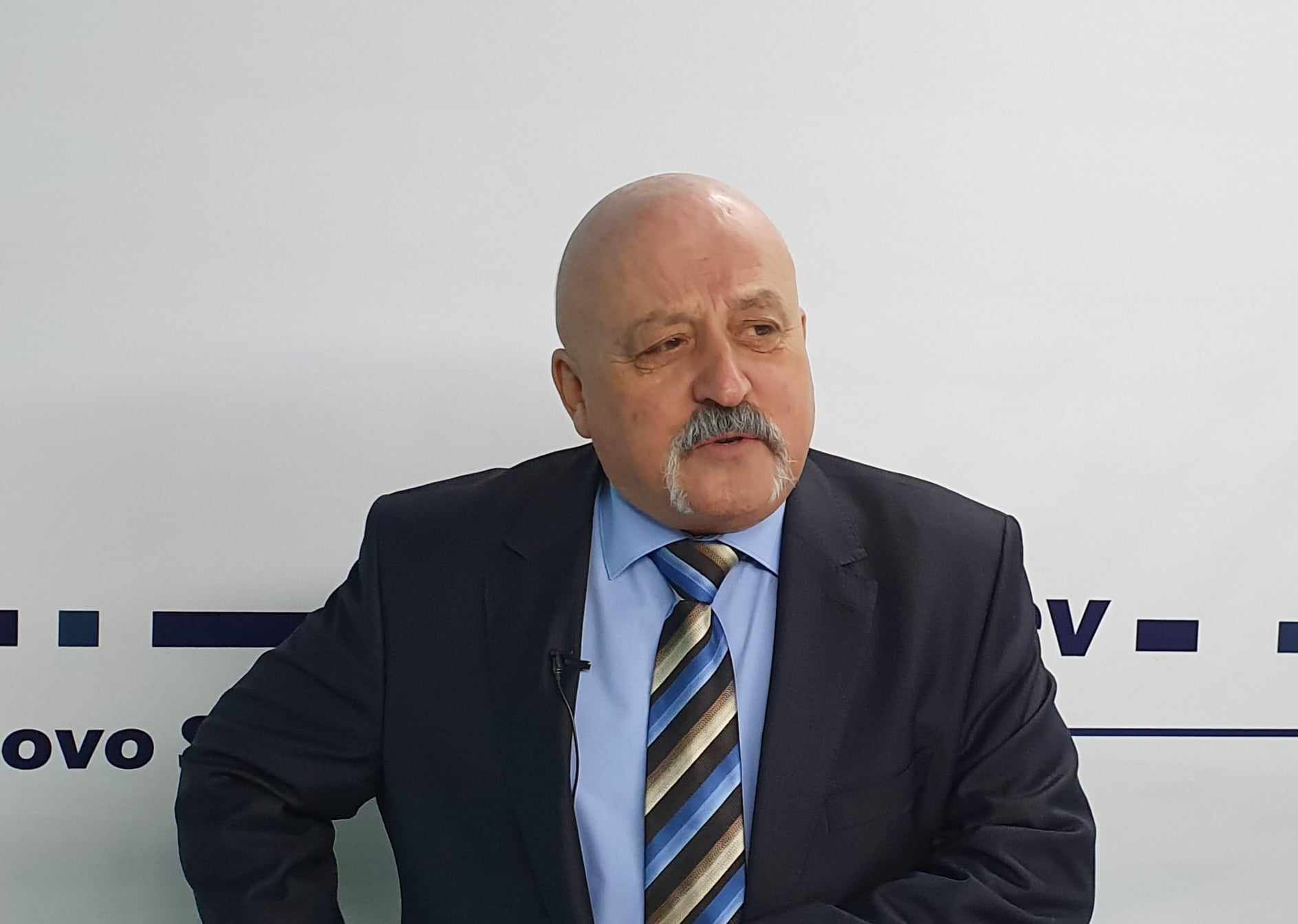
We asked Nebojša Vlajić, one of the most active Serbian lawyers in Kosovo, about the quality of justice with the current translation systems. He confirmed that translation is provided at court hearings because the court understands that violating language rights is a serious procedural violation, which could even lead to the annulment of a verdict. However, he points out that the quality of translations is a fundamental and unresolved issue.
FOTO: KoSSev
According to Vlajić, most court translators are „extremely unqualified and incapable.“
„They translate poorly and slowly, so half of the trial cannot be followed. The right to use one’s language is formally respected, but the outcome is subpar,“ he stated. He also highlighted the problem of „multiple translations“ in the process. For example, a witness speaks in Serbian, the translator translates into Albanian, the judge dictates what will go into the record, and then the record is translated back into Serbian. This leads to numerous layers of translation, akin to the children’s game „Chinese whispers,“ where the original message becomes distorted.
Vlajić suspects that some translators may be relying on tools like Google Translate to ease their work, leading to misunderstandings of critical details in legal documents that concern people’s lives and futures.
Delays in translations are also common for judgments. For instance, lawyers sometimes accept documents in Albanian to avoid delaying the process, especially in time-sensitive matters like detention decisions, where the decision is first made in Albanian, and the Serbian version is provided days later.
The European Commission has also noted the language barrier in Kosovo’s judiciary, although in more diplomatic terms. „Courts struggle to comply with the requirement of the Law on languages to publish judgments in both official languages due to a lack of Serbian translators. The availability and quality of interpretation in court proceedings remains a challenge,” as stated in the Commission’s 2023 report on Kosovo.
Language Barrier
One of the issues that has further strained relations between the two communities is the deployment of hundreds of Albanian police officers from all over Kosovo to the North, after Serbs left the police service in November 2022. The language barrier between police officers and Serbian citizens is one of the most pronounced and everyday problems, further complicating the already difficult and sensitive interethnic relations.
As highlighted in reports cited in this article, citizens often report situations where misunderstandings arise with police officers in the field. They feel discriminated against regarding their right to speak Serbian, both in verbal and written communication. However, since such experiences are rarely reported, official statistics do not clearly confirm that citizens are suffering from discrimination.
Citizens’ experiences in the four northern municipalities reveal the following: Police officers, particularly older ones, often refuse to speak Serbian, even though they indicate they understand it. Sometimes, they insist that citizens speak Albanian when stopped. Additionally, many young Serbs in the North do not speak Albanian, while young police officers from other regions stationed in the North do not speak Serbian. If these officers do not want to offer English as an option, as their older colleagues do, and insist on Albanian, misunderstandings often arise, leading to incorrect interpretations of what the citizen or officer is trying to convey.
Where to Complain?
Complaints would typically be directed to the Kosovo Police Inspectorate. However, in its annual report, alongside daily media statements or responses, the Police Inspectorate continues to send information exclusively in Albanian.
In November, the police announced a competition for over 20 translators, requiring proficiency in both Serbian and Albanian, except in Pristina, where English was also requested.
At a recent press conference held by General Director of Police Gazmend Hoxha in North Mitrovica, in response to complaints from local citizens about the language barrier in communication with the police, he stated that the institution is working to improve this issue. He added that the number of police officers from minority communities will increase over generations.
Media Experience
Contrary to the experiences of citizens in northern Kosovo interacting with Albanian police officers, the new police command in the region is almost always available to the media in at least three languages, including Serbian. A new email address for the North Kosovo police sends press releases and daily reports in Serbian, although journalists cannot use it for inquiries. The central police directorate, however, mostly communicates in Albanian, though crisis updates are occasionally sent in Serbian.
Serbian-language media face significant challenges due to the lack of timely translations and frequent violations of the Language Law. Journalists have struggled with coverage of major events, such as this year’s population census, relying on Albanian media for updates. The Civil Registration Agency recently published preliminary results, but they are only available in Albanian.
The situation is further complicated by senior officials’ reluctance to communicate in Serbian, despite frequent visits to northern Kosovo. Kosovo leaders, such as Justice Minister Albulena Haxhiu and Interior Minister Xhelal Sveçla, have refused to speak Serbian, even when fluent, and have addressed the media exclusively in Albanian. This has been a recurring issue with Kosovo’s top officials, despite their stated commitment to inclusivity.
The Kosovo government rarely provides translations for media or events, even when addressing international officials, and the official translation quality on their YouTube channel focusing on translation of sessions is criticized. Unlike the government, the Kosovo Assembly does not offer Serbian translations, forcing media outlets to translate from Albanian on their own.
Earlier this year, the chief editor and directors of three local media outlets from the North (KoSSev, Radio Kontakt Plus, and Radio Mitrovica Sever) sent a trilingual letter to the ministers who frequently visited the North, urging them to improve communication. However, they never received a response.
Banking Confusion
NLB Bank in Kosovo sends all account statements and financial information to Serbian clients exclusively in Albanian. Despite offering a Serbian option on their website, it doesn’t work. In the North Mitrovica branch, Serbian-speaking staff provide information in person, and clients often use the e-banking app to track their accounts.
However, the app presents information in Albanian, with some Serbian mixed in but containing errors. Due to concerns about financial data security, clients prefer in-person visits over using the app. Journalists have requested the addition of proper Serbian language support, but the bank has not responded.
Obvious Violations of the Language Law
The restructuring of local governments in Kosovo has led to increased challenges in communication for Serbian residents, especially since the majority of employees were previously Serbs and Bosniaks. In Northern municipalities, some residents feel a sense of deliberate discrimination, particularly when it comes to language requirements.
For instance, Serbian speakers are often asked to write in Latin script instead of Cyrillic. One journalist was told by a municipal employee in November that their documents should be written in Latin as they „don’t understand Cyrillic.“ In another case, a medical report was issued exclusively in Albanian, and handed over in an open envelope at the municipal office.
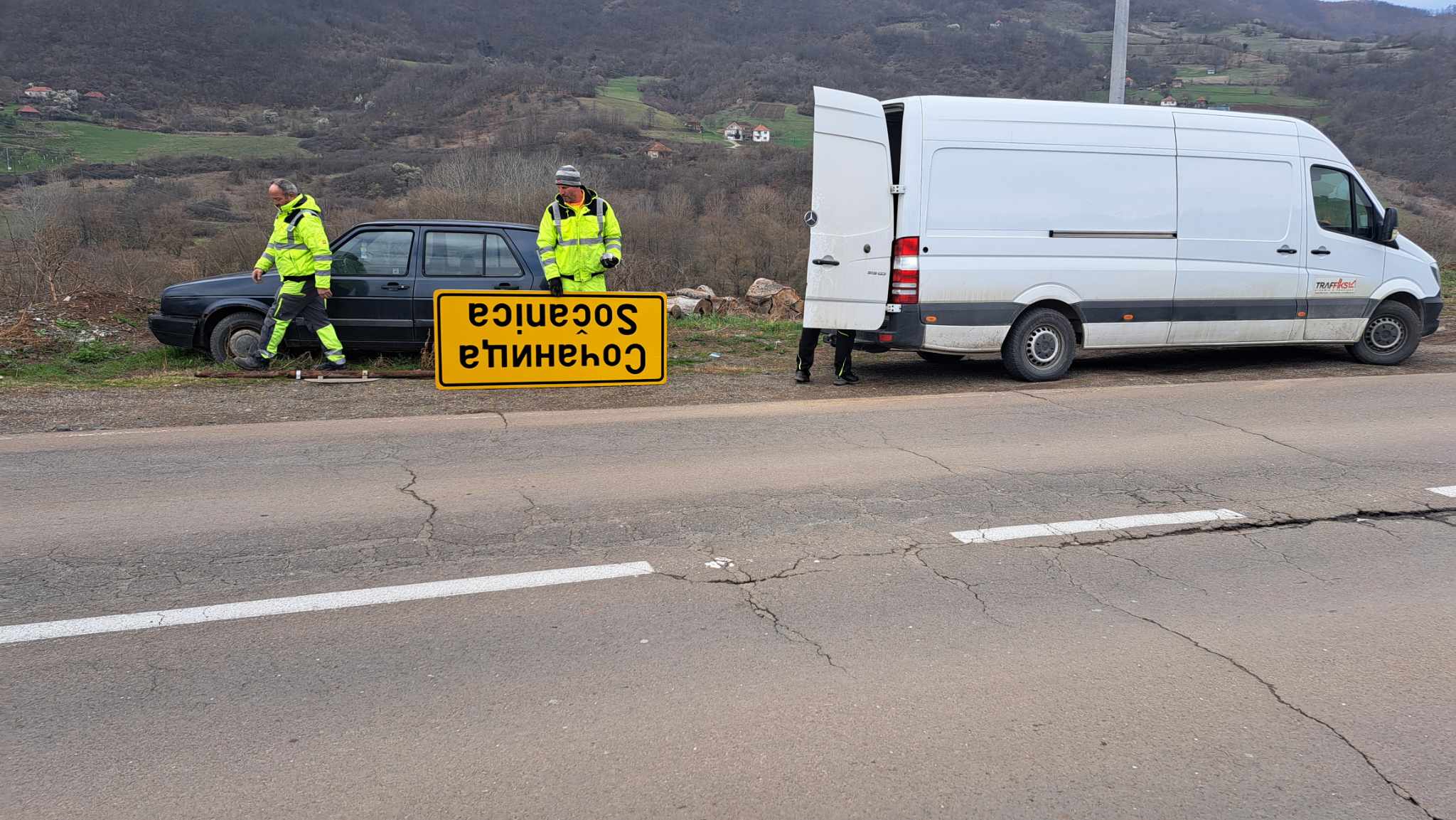
On the streets, the Kosovo authorities show language inconsistencies in public signs. For example, a renovated police substation in Socanica, a Serbian-majority area, displayed the sign “POLICIJSKA PODSTANICE – SOCANICE,” while a newly planned police station and civil registry agency in Lesak used the incorrect name. Similarly, Kosovo Post’s website lists Leposavic as “Albanik” under postal codes, and newly installed bilingual signs at a detention center in North Mitrovica contain grammatical errors. Even the name of the Basic Court in Pristina is incorrectly written as “Osnonvi Sud Priština” in Serbian.
These are clear violations of the Language Law.
1 od 4
Local Governments in the North Prioritize Albanian, Marginalize Serbian
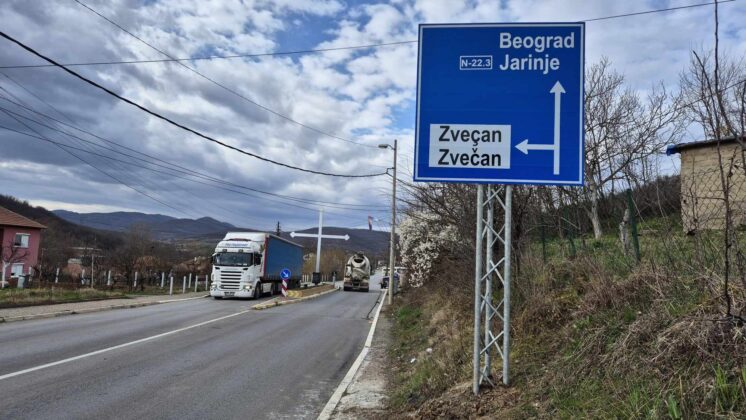
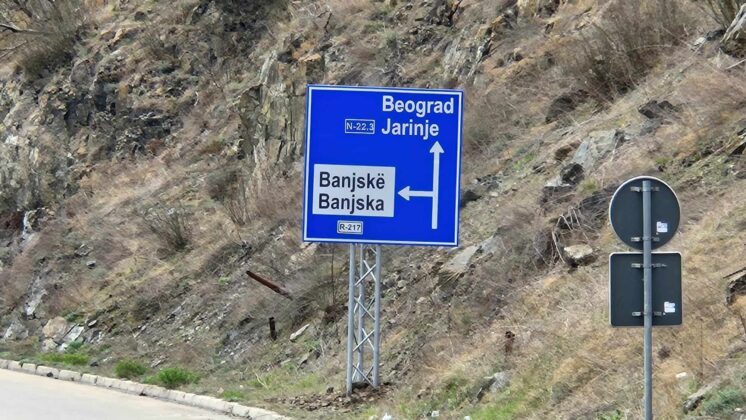
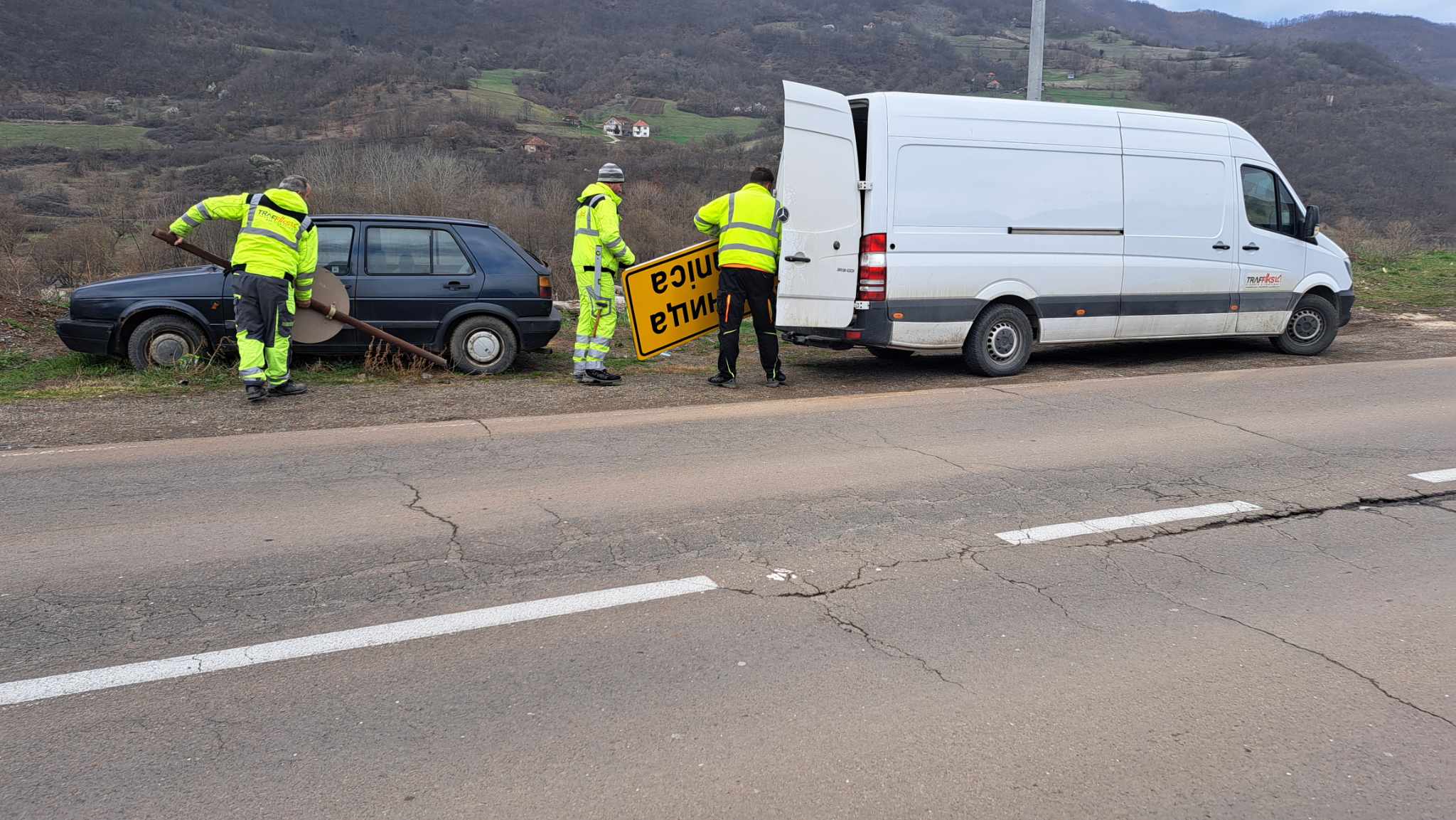
Over the past year, in four northern municipalities with a Serbian majority, old Cyrillic signs, previously aligned with the Serbian state system, have been removed and replaced with new trilingual traffic signs for entering and exiting municipalities, as well as institutional names. On these new signs, the names of towns, institutions, and cities are first written in Albanian, followed by Serbian in Latin script.
FOTO: KoSSev
A noticeable difference in font size has been observed: the Albanian text is highlighted, while the Serbian and English text is in a smaller font. This change is a violation of both the Constitution (Articles 5 and 59) and the Language Law, as these municipalities are predominantly Serbian.
Research over the years has pointed to systemic neglect and discrimination against the Serbian language, with many translation errors found in laws and even in the Constitution itself.
According to Article 59, Section 9 of the Kosovo Constitution, members of communities have the right to use local names, street names, and other topographical signs that reflect the multiethnic and multilingual character of the area. Albanian and Serbian are official and equal languages, including their scripts. The Language Law specifies that signs indicating towns, villages, streets, and other public places must be marked in both official languages and the languages of the communities with official status in that municipality.
The northern municipalities are mostly Serbian, with three of them having over 90% Serbian population.
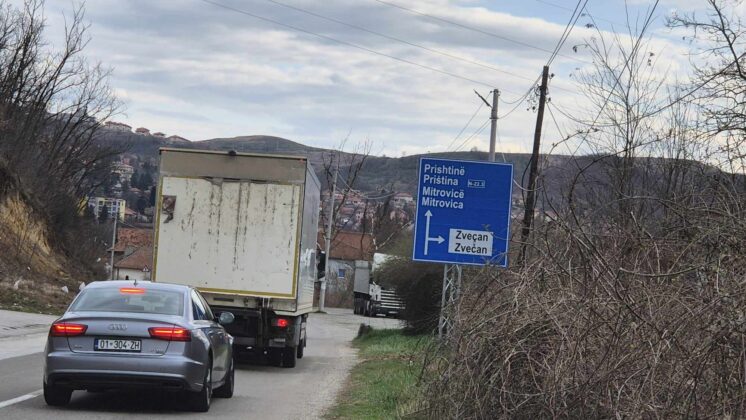
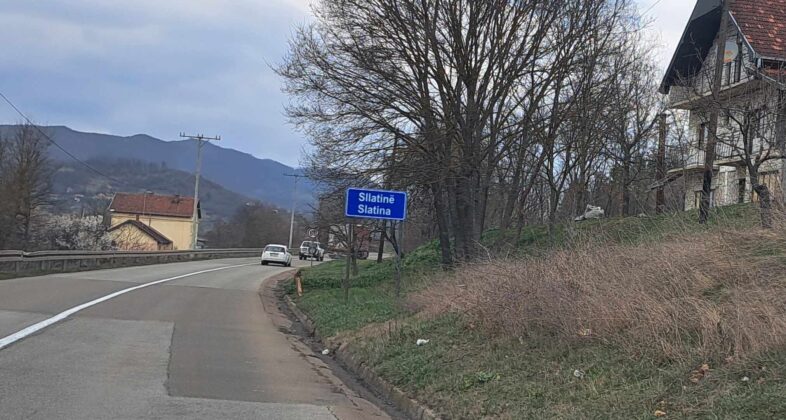
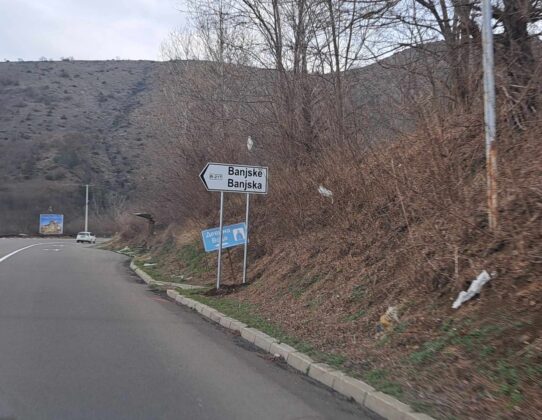
For years, in the area south of the Ibar River, the erasure of Serbian toponyms from traffic signs has been a common occurrence, with an increased emphasis on Albanian through larger fonts or sometimes complete omission of Serbian names.
This practice continued this year with the repainting of newly installed signs in the north. However, Kosovo authorities launched a campaign to clean the repainted Albanian toponyms, claiming it was part of a broader effort across Kosovo.
Still, travelers on roads south of the Ibar continue to see a different reality.
1 od 8
Foto: KoSSev
FOTO: KoSSev
FOTO: KoSSev
FOTO: KoSSev
FOTO: KoSSev
Foto: KoSSev
Foto: KoSSev
Foto: KoSSev
From Strong Argumentation to Ignorance
The issue of violating Kosovo’s Constitution and Language Law was highlighted earlier this year when the government started replacing signs in northern municipalities. Kosovo’s Language Commissioner, Slaviša Mladenović, insisted that traffic signs should first display names in Serbian, followed by Albanian, reflecting the region’s multiethnic makeup.
Despite recommendations from Mladenović and support from international diplomats like Tomáš Szunyog and Michael Davenport, the government failed to address the legal violations.
Even months later, Mladenović confirmed that the recommendations were ignored. When contacted for a year-end update, Mladenović asked to be contacted in the new year, as he was on vacation.
Persecution of Cyrillic
The Kosovo Language Law does not explicitly mention either Cyrillic or Latin script, instead using the plural form „scripts,“ which leaves room for interpretation. This has led to difficulties for the Serbian community, as Kosovo’s authorities have largely interpreted the law in a way that marginalizes Cyrillic.
Mladenović pointed out that the law’s ambiguity has placed Serbian script at a disadvantage, allowing the government to prioritize Latin over Cyrillic. As a result, there are frequent violations of the language law, with more institutions failing to comply than respecting it.
Mladenović emphasized that the community’s efforts are focused on ensuring access to services and information in Serbian, with Cyrillic being secondary.
Language as an Identity Issue
However, Cyrillic script is the official script of the Serbian language, and it is astonishing that someone would dispute the script of the Serbian language in 2024, as repeatedly stated this year by the Deputy Ombudsman of Kosovo, Srđan Sentić.
He reiterated this at the end of 2024: „The question of language is not just a matter of communication. It is primarily a matter of identity, and one of the main pillars of identity is language. It is also a matter of culture.“
He confirmed that Serbs in Kosovo perceived the removal of Cyrillic signs as an attack on their identity. „This is an extremely serious attack on human rights. I believe these are not examples to be followed,“ he repeated in interviews, including those in Albanian.
He also pointed out the expanding trend of „Albanization of the Serbian language,“ which has now reached the municipal level.
The expulsion of Cyrillic script and the spread of what he described as „Albanized Serbian“ are gaining momentum in the North, further confirming the reality in Kosovo where the second official language is treated with general neglect or, as researcher Waugh put it, as a conscious act of discrimination.
Recommendations
In the „Road Map“ published by the non-governmental organization Aktiv at the beginning of 2024, and with the involvement of researcher Waugh, the following recommendations were made to improve the situation regarding language rights in Kosovo:
*Establishing a Database of Legal Acts: Create a comprehensive database to monitor compliance with the Law on the Use of Languages and other laws protecting language rights. This will help correct translation errors in legal acts and reduce the risk of inconsistent interpretations of legal norms.
*Hiring Additional Translators: Increase the number of translators at both the central and local levels to enhance services for non-majority communities through communication in their native languages. This process should include professional training and courses for translators to ensure they are adequately prepared for their responsibilities.
*Implementing a Translation Quality Mechanism: Develop a coordinated system for proofreading, editing, and overseeing legal translations to ensure their accuracy before publication. This mechanism will help prevent the release of unverified translations.
*Creating an Official Communication Regulation: Establish a regulation to ensure inter-institutional communication is conducted in official languages, with a mandatory response in the language in which a request or complaint is made, in accordance with laws and international standards.
*Translating Websites and Content: Guarantee the translation of content from the websites of central and local institutions into the languages of non-majority communities, improving accessibility to information for all citizens.
*Developing a Detailed Language Use Plan for Court Processes: Create administrative guidelines or subordinate laws to regulate the use of non-majority languages in courts, ensuring linguistic equality and access to justice for members of non-majority communities.
*Multilingual Toponym Dictionary: Develop a toponym dictionary, complete with descriptions, to be used in all official documents in all official languages. This will ensure linguistic equality and transparency in the naming of geographical locations in Kosovo.
By Tatjana Lazarević and Dragana Vukosavljević
Preuzimanje i objavljivanje tekstova sa portala KoSSev nije dozvoljeno bez navođenja izvora. Hvala na poštovanju etike novinarske profesije.

 From Law to Practice