This week, civil society representatives and journalists from Belgrade and Pristina gathered in North Mitrovica, bridging perspectives on media collaboration, journalist safety, and the complex security situation facing Serbs in Northern Kosovo. Against a backdrop of deep-seated crises, they delved into how these issues have impacted journalistic integrity and the public’s perception of reality on the ground.
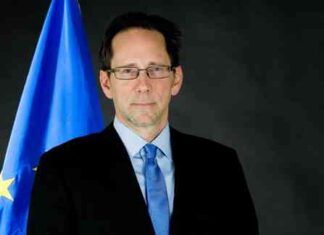
Miodrag Marinković, a prominent civil leader from North Kosovo, presented a candid assessment of the challenges faced by the Serbian community in the region.
„For over a decade, many here believed that Belgrade’s leadership was fighting for their interests, but recent events have shattered that illusion,“ he said, referring to a sharp “wake-up call” last year when residents recognized that this rhetoric from Belgrade was “a lie.”
According to Marinković, the leadership in Belgrade functions as a self-interested group without clear ideological values, seeking only to consolidate its hold on power, often at the expense of ordinary citizens.
At the same time, he highlighted the pressures exerted by Pristina’s policies, which, he argues, have failed to effectively engage with the Serbian population in the north.
“There is a form of forced integration taking place, driven by populist politics that aim to present the Albanian government as successful,” he said.
This forced integration, he believes, is intended to give the impression that the Serbian community is „freer“ now, but in his view, it is merely a different form of oppression. “We’ve exchanged one form of hardship for another,” Marinković said, pointing to the restrictions and repressions the community now faces under Kosovo police.
Civil society groups have recently severed ties with the European Union Rule of Law Mission in Kosovo (EULEX) over alleged bias in reporting and handling cases involving Serbs. Marinković claims that EULEX reports “do not reflect the real situation” and fail to hold accountable those responsible for rights abuses.
Among the concerns raised were allegations of police brutality by the Kosovo police, including reports of mistreatment and torture in detention facilities.
Marinković referenced disturbing claims about a particular “camera-free room” in a Mitrovica police station, where he alleged Serbian detainees face physical abuse.
Cases such as that of Miloš Subotić, a North Mitrovica local, were highlighted as examples of these troubling practices. Subotić recently came forward, claiming he was beaten while in detention.
„Here is an upstanding citizen, a liberal figure and advocate for EU cooperation, who didn’t deserve such treatment, even if he did commit an offense,“ Marinković noted, stressing the courage required to speak out amid fears of retaliation.
In addition to the alleged physical abuses, Marinković pointed out instances where Kosovo police officers openly wore symbols of Greater Albania and the UÇK (Kosovo Liberation Army) – a provocative stance for Serbs living in the region.
„We don’t want any kind of nationalist justice, nor are we calling for revenge. We just want the police officers who have broken the law to be punished,“ he added.
At the meeting, Marinković also appealed to Serbian investigative journalists to delve into cases of corruption tied to Belgrade’s involvement in Kosovo.
“Investigative journalism is important in Serbia, and we all enjoy reading these stories. But we feel not enough attention is paid to Belgrade’s corrupt practices in Kosovo. This corruption is systemic, from the top levels of government in Belgrade down to their local representatives here.“
Preuzimanje i objavljivanje tekstova sa portala KoSSev nije dozvoljeno bez navođenja izvora. Hvala na poštovanju etike novinarske profesije.