In a world of plastic fruit and over-sprayed apples, the farmer is still waking before dawn to earn his bread the hard way. For centuries, he has endured. Yet today, his future on Kosovo’s soil is more uncertain than ever.
In the third episode of the series “Da te pitam, komšija?”, broadcast from dual studios in North Mitrovica and Gorazdevac, the spotlight was placed firmly on the challenges and resilience of Kosovo’s agricultural community. Speaking on the program were veteran journalist Ivan Vučković, who has documented life across the villages of Leposavic, and Mehdi Mulaj, an agricultural expert from the Pec region.
Farmers in northern Kosovo face a host of challenges. Chief among them is the lack of an irrigation system, despite the availability of water resources. Other key issues include poor organization among farmers, limited support from both local and central institutions, and insufficient subsidies—which many say should be larger, more fairly distributed, and easier to access. Ultimately, and in large part because of these problems, there is also a shortage of people willing to stay and work the land.
“If the system can’t solve anything else, it could at least address nepotism and corruption. Even just tackling that issue would lift farmers’ spirits and encourage them to take a more active role in agriculture.”
In the south, a local official rejects the idea that there’s a lack of investment or fairness in the system. However, he acknowledges that despite favorable conditions, Kosovo continues to import both fruit and meat—while local farmers toil year-round for modest profits.

Vučković: “I Wish I Could Say Farmers in Leposavić Enjoy the Fruits of Their Labor—But That’s Not the Case”
Speaking about whether farmers in Leposavić can make a decent living from agriculture, Vučković offers a candid assessment:
“It would be wonderful if I could say they live well, that the system is functional, that those who produce also get paid and enjoy the fruits of their labor—but that’s simply not the case,” he says.
His conclusion comes from years of visiting farmers in the region—people, as he describes, “with calloused hands, up at dawn and working late into the night.”
What they need, he insists, is a proper strategy, systemic support, and fair subsidies. But when support does exist, it often goes to large farms, while small-scale farmers continue to struggle.
“I’ve filmed livestock breeders who milk their cows and go door-to-door, from home to home, store to store, just to sell their milk and earn something for their hard work. That backbreaking labor brings some improvement—but it’s far from enough.”
He emphasizes that small farmers need just as much support as the large ones, and that aid must be free from nepotism and corruption.
“Without a serious strategy, clear systemic support, and fair subsidies, farmers can’t survive. They all say the same: more support is needed—and it must go to those willing and able to work, regardless of the size of their farm. We should look to good examples from Europe, where agriculture thrives through structured support programs. As things stand, we’re barely breaking even—and whether anything changes depends entirely on the system.”
Livestock Farming Is Declining, But Young Farmers Are Bringing Innovation
The Leposavic region and Ibar Kolasin have long been known for livestock farming. The slopes of Rogozna, Mokra Gora, and Kopaonik are ideal for this agricultural branch, but the days when a household’s wealth was measured by the number of livestock are long gone.
For decades, livestock numbers have been in steady decline across these municipalities—along with the population itself, particularly in rural villages, which are gradually disappearing.
Vučković recalls with nostalgia the time he filmed the last bačija (a traditional summer mountain pasture) in the area, when a farmer would still drive his herd up for summer grazing.
“The village used to be alive. Now, in the entire area beneath Kopaonik, with more than 20 villages around Belo Brdo, you’d be hard-pressed to count even ten cows,” he says.
Today, only large-scale livestock farmers are managing to survive in this region. According to Vučković, these farmers have well-organized operations, receive some support, and through hard work have managed to expand their holdings. Many of them come from the younger generation—and that gives him hope.
“What encourages me most is that young farmers are starting to see their farms differently—not just as traditional inheritances to be run like their fathers or grandfathers did. They’ve started improving them. More importantly, they’re educating themselves, keeping up with innovations, visiting agricultural fairs. These aren’t the kind of farmers who hear about a hay baler ten years after everyone else. Whether they can afford the machinery is another matter,” he notes.
He points to a good example: local farms teaming up to buy a corn harvester together—“an innovative approach,” he says, “since we no longer have cooperatives to manage such things. Now, they’re taking matters into their own hands.”
Still, he adds, such farms are few and far between.
Livestock Numbers Rebounding in the Pec Region
The situation in the Pec region mirrors the broader challenges facing livestock farming in Kosovo. Older generations recall with nostalgia the days when thousands of heads of cattle would be driven from the Metohija plain to pastures on the slopes of Mokra Gora in northern Kosovo.
Still, according to Mulaj, the livestock population in this region has been rejuvenated—thanks, he says, to the government in Pristina and local municipalities, which have increased subsidies for this sector, particularly those targeting young farmers.
However, he acknowledges that many young people are reluctant to take up this demanding line of work.
“We can say there is institutional support for young farmers here, and it does serve as a kind of incentive. But young people hesitate—they want to leave the villages and move to the cities, drawn by better living conditions and the appeal of urban life,” Mulaj explains.
He also admits that the number of livestock remains insufficient compared to the population’s needs, which forces Kosovo to import milk, dairy products, meat, and meat products—despite having over 10,000 hectares of pastureland.
In other words, the natural conditions are favorable for rebuilding livestock farming and expanding agricultural capacity, from dairies to milk production.
As in the north, the Pec region has its success stories. Families like the Memarović brothers from Osojane and the Tijanić family from Crkolez keep several hundred head of cattle.
There are also local dairies operating in the region. For instance, the dairy in the Rugova Gorge plays a key role in supporting local farmers.
Northern Kosovo Lacks a Dairy Plant
In contrast to the Peć region, the northern part of Kosovo lacks dairy plants, despite the clear need for them. Vučković identifies this as one of the key issues, highlighting the absence of systemic support, which, he reiterates, is crucial for the development of both agriculture and livestock farming.
The absence of dairy plants has led farmers to create their own small markets, relying on a closed production cycle—from milking livestock to delivering fresh milk or dairy products to local buyers. This has resulted in a diminished livestock population, reduced milk production, and increased reliance on processing milk into cheese or other dairy products.
„Some farmers have been forced to make homemade cheese because they didn’t know what to do with all the milk. They entered this business hoping to meet the local demand for milk. However, without proper infrastructure, they turned to making cheeses and kaymak (a dairy product), using their own vehicles for deliveries. Even the children got involved,“ Vučković explains.
He praises the positive example from Rugova Gorge as a model for how dairy farming should function. Vučković recalls better times in the north when there was a small dairy production facility that operated for a short period, but they seriously considered the idea of large milk storage tanks in many villages, where farmers could collect milk together and have it transported. This system worked for a while.
An ideal situation, according to Vučković, would be for a milk collection tanker to visit the villages in the north, buying up milk from local farmers
“If farmers had solid support, with fair distribution of subsidies, they would expand their capacities and fully satisfy the local market,” Vučković concludes.
Mulaj Believes Municipal Advisors Can Help
Mulaj encourages farmers to reach out to municipal agricultural advisors and the Ministry of Agriculture. He believes there is potential for dairy farming in the Leposavic region, though he isn’t certain of the exact capacity. However, he does think there is a sufficient amount of milk that could be collected and transported to collection points, even though he isn’t familiar with the Mitrovica area.
He emphasizes that both dairy plants and agricultural advisors play an important role in the development of the sector.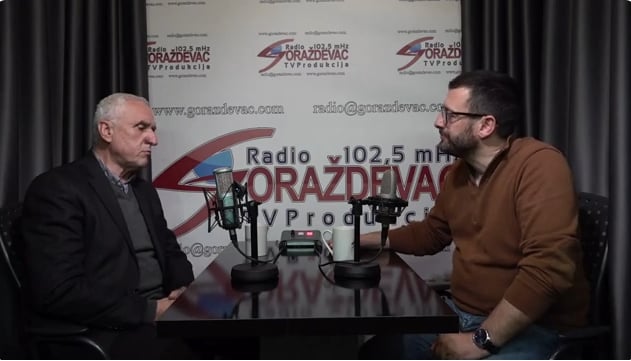
Mulaj also mentions the current agricultural support program for producers across Kosovo, which is available from April 3 to May 2. He urges farmers to visit their municipalities, gather information, and familiarize themselves with the support criteria.
Previously, applying was more complicated, requiring land ownership documents or inheritance proof, but now only a sworn statement is necessary, confirming that the applicant is actively farming the land, even if it is not registered under their name. A commission will verify the farming activity on-site. There are also opportunities for networking and collaboration to enhance productivity.
Mulaj highlights the successful work of his sector over the years, supporting farmers in areas like acquiring livestock, establishing dairy plants, obtaining machinery, investing in beekeeping, implementing irrigation systems, and offering expert support, including the establishment of agricultural advisory bodies.
Poor Communication Between Local Authorities and Citizens in the North
In contrast to the examples from Pec, Vučković criticizes the poor communication between local authorities and citizens in Northern Kosovo. He believes there is no clear, ongoing local support for farmers.
„Let us remember some earlier situations when mayors knew the farmers personally. Did they help each of them? No, but on the other hand, there were well-known examples of quality farmers. I know of many farmers who didn’t have the information that they could access assistance; they only earned what they managed to do through their own hard work. Simply put, the information didn’t reach them.“
Kosovo Government’s Agriculture Program for the North: “I Never Heard Of It”
In a September interview, the now-acting Minister of Agriculture, Faton Peci, announced millions in investments for agriculture, particularly focusing on agro-tourism and the North of Kosovo. This program, supported by the German government, began in the same month and is set to last for three years, offering financial support in three tiers, ranging from €10,000 to €300,000.
However, Vučković, who frequently visits villages in the North, mostly inhabited by Serbian and Bosniak populations, remains skeptical: „Whether it exists, I don’t know, but I haven’t seen it. It hasn’t materialized in a way that makes it easy to apply, and it doesn’t eliminate the need for mentors to create agricultural projects. There are no big grants.“
Until recently, the main issue was registering livestock, he stressed, which required a support program. Additionally, the most visible support in agriculture has been in beekeeping.
He adds that “things need to be resolved more quickly” and that subsidies should reach those who need them equally. For example, in Leposavic, it is well known who the serious producers are, but there are numerous cases where donations are granted, yet the corresponding farms are nowhere to be seen.
Vučković stresses, “Many are disappointed because donations often don’t end up in the right hands,” and gives bizarre examples where grants end up in the hands of individuals who ask „for a loan“ of livestock from prominent farmers „while waiting for the commission to pass.“
Agriculture in Leposavic: Growth in Vegetable Farming
While livestock farming in the region faces constant challenges, with the number of cattle steadily decreasing, vegetable farming in Leposavic is showing promising growth.
Vučković explains, „We have a number of serious vegetable growers who cover several dozen arias, supported partly by systemic aid, but also driven by their own efforts. They started with a few small greenhouses and have since expanded.“
One notable example is Jovica Marković, a young vegetable grower from Kamenica near Leposavic, who has been cultivating in greenhouses for over 20 years.
„He is truly one of the most serious vegetable farmers, whose greenhouses operate year-round—shifting from one crop to another. Yes, he received donations, but he also invested on his own, and today he is a significant grower, producing seedlings and supplying various crops to markets in Northern Mitrovica. He is always present here. Currently, he’s finishing up his lettuce crop, planning his next vegetable plantings,“ says Vučković.
Marković’s success illustrates the importance of consistent support for quality farmers. „He’s a young, dedicated man, one of the few who received support and continued to grow, showing the importance of backing serious individuals who are committed to their work.“
Such success stories highlight the need for an agricultural support system that recognizes the seriousness, effort, and long-term goals of farmers and follows their development over time.
Another example is Zlatko Sekulić from Gornji Krnjin, who is one of the region’s most dedicated apple producers with his two-hectare orchard. Sekulić is planning to expand further and has gradually developed his orchard with a combination of support and personal effort. Faced with market challenges, he invested in a refrigeration unit and set up a juice production line, as well as anti-hail protection for his crops.
„Now he can decide when to sell his products. He’s an innovative man who turns excess produce into juices and jams. Traditionally, we made brandy here, but now we focus on fruit products, jams, juices, and dried fruit,“ says Vučković.
In this area as well, Vučković emphasizes the role of family-run businesses on the North, where investments in innovation are driving the growth of agriculture.
Viticulture Blossoms in Leposavic
While Leposavic cannot compare to the Pec region or the Metohija valley in terms of arable land, especially when it comes to viticulture, the region is finding its way forward through the innovation of its farmers. This is particularly evident in the blossoming of viticulture, which has become a key agricultural focus in the area over the past decade or so.
The revival of this tradition started with winemaker Milija Jevremović, who, with a small vineyard, successfully restored his family’s centuries-old winemaking legacy. Today, Jevremović passionately cultivates his vineyards, expanding both the variety of grapes and wines he produces, while also educating himself and his family in the process.
Inspired by his success, other farmers have followed suit. Notable vineyards in the area now include the Radosavljević, Vulićević, and Lakićević families. The Lakićević winery, the largest in the region, produces around 30,000 liters of wine annually and has 12 hectares of vineyards.
This growing industry is becoming a source of pride for Leposavic, as it has transformed into a viticultural hub.
„Through constant work on improvement, they attend fairs and win top awards. While we can’t compete with the Orahovac region in terms of climate, we must recognize the effort. Now, we have more than 15 hectares of vineyards,“ says Vučković, highlighting the region’s emerging wine brand.
Fruit Orchards Blooming in the Pec Region
In the Pec region, there were once vineyards covering up to 200 hectares, though now the area is significantly smaller.
Despite this, the region still boasts several agricultural products that define its identity. Apart from dairy products from the Rugova Gorge, fruit orchards—particularly plum and raspberry fields—are undoubtedly a key brand of the Pec area.
Mulaj highlights the significant investments made in fruit farming, including drying facilities and raspberry fields. He emphasizes that everything produced in the raspberry fields is purchased, and notes that there are both small family orchards and larger plantations. However, one of the key challenges remains Kosovo’s reliance on fruit imports, which keeps prices high.
„We import products we can produce ourselves. It would be much better both in terms of quality and price if we covered the market with domestic production. We pay more for imported goods, while our farmers could sell apples at 30 cents per kilogram, but in markets, they are sold for 60 or 90 cents.“
Mulaj also points out that significant investments in fruit farming have been made, mainly through the Ministry of Agriculture and local municipalities, as well as through cooperatives.
However, he criticizes the inefficiency of NGOs in comparison to these cooperatives, which allow small producers to profitably enter the market. A notable example of successful collaboration is the partnership between the cities of Šabac and Pec, which led to joint investments in strawberry cultivation.
While this partnership has been a model for fruitful cooperation and investment in agriculture, Mulaj laments that progress in strawberry farming has stagnated.
„In the early years, the results were outstanding, but not anymore. The pandemic disrupted things, but we still assist these farmers,“ he says, noting that special care is required every two or three years for strawberry cultivation.
Uncertainty Surrounds Raspberry Farms on the North of Kosovo
Raspberry farms on the North of Kosovo, including those in the Strpce area, have faced a similar fate to those in other parts of the region. After a period of expansion in previous years, with significant investments and profits, raspberry farming has been plagued by uncertainty, as Vučković explains:
„Raspberry farms have always been in uncertainty. The price fluctuates from season to season, ranging from being highly profitable to not worth the effort at all. I know many cases in Leposavic where raspberry farms were shut down. This is because those who own cold storage facilities set the prices, and that price is never the same. When serious companies enter the market, they know at the start of the season what the final price will be and whether it will be profitable for them. However, raspberry farmers are uncertain even during the summer about what the price will be,“ says Vučković.
He points out the example of a raspberry plantation of several hectares owned by the Nešović brothers in his area, noting that one of them decided to quit due to the stress of the unstable market and unpredictable pricing.
„This is a problem, but it applies to other sectors as well. If there is no clearer and more concrete support from the system, farmers won’t be able to survive in the long term,“ Vučković concludes.
Vučković: My Mission is to Put the Farmer on a Pedestal
Vučković describes his mission as one of elevating the ordinary farmer, showcasing their struggles, joys, and the happiness that comes with continuing traditions through future generations. He says:
„My mission, after working in this field for many years, is to put the common man, the farmer, on a pedestal, to show him with all his hardships, joys, and happiness. When we are lucky enough to continue the tradition through descendants, there is nothing more beautiful.“
He believes that in a time when the nation’s food is artificially made and unhealthy, it’s crucial for people to realize that:
„The only person who will offer truly healthy food is the farmer. He doesn’t treat it any differently—what he gives to his children is what he grows and puts on the market.“
For Vučković, the farmer symbolizes persistence and health. Despite being broken by many battles, the farmer survives
The farmer’s resilience has been Vučković’s inspiration, motivating him to build his own garden.
„I’m from Rogozna, but I didn’t work the land. My parents did that, they kept me away from it. But eventually, I fell in love with the land. I organized two small greenhouses, I have an outdoor garden. I dream of having chickens running around, and a horse that I can ride in the mountains,“ he shares.
His mission is also to see his child go into the greenhouse, pick a cucumber, wipe it with their hand, and eat it.
„For this reason, I take my hat off to every farmer. I respect the farmer above all. If I can, I will try in every way to help them get through the difficult times, after which, I hope, they will rise like a phoenix and be put on a pedestal. One day, we will all say – you are the one who matters,“ concludes Vučković.
Preuzimanje i objavljivanje tekstova sa portala KoSSev nije dozvoljeno bez navođenja izvora. Hvala na poštovanju etike novinarske profesije.