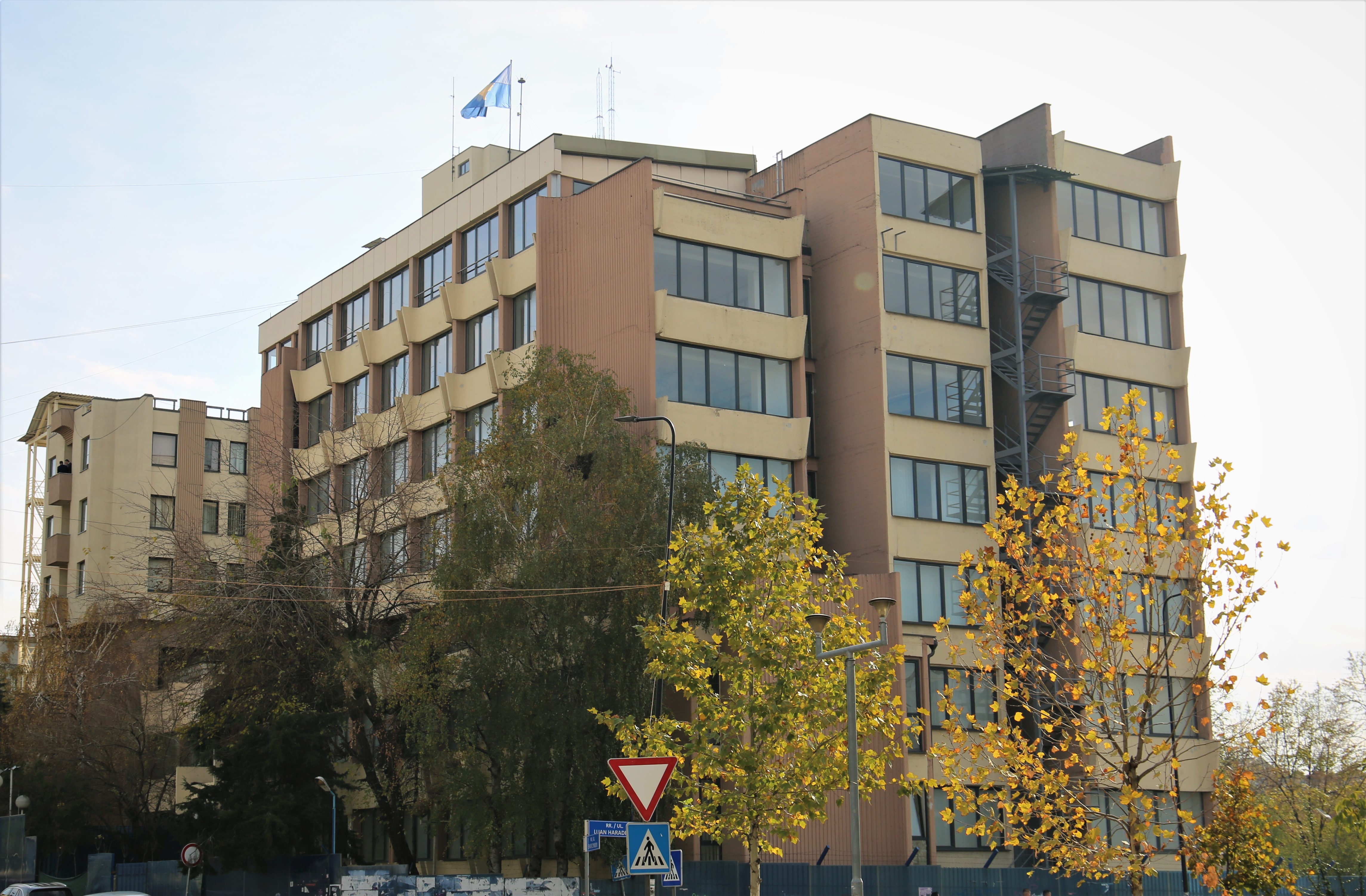
The Special Prosecutor’s Office in Pristina has filed an indictment before the Basic Court against J.Đ. from North Mitrovica, charging her with espionage.
According to the indictment, J.Đ., who was employed as a “National Program Officer” at the OSCE Regional Center in Mitrovica until her arrest on February 28, is accused of “knowingly and intentionally engaging in multiple actions that actively supported the intelligence activities of a foreign service – namely, Serbia’s Security Intelligence Agency (BIA).”
Prosecutors allege that she collected and distributed sensitive documents and information to BIA officials, thereby “endangering Kosovo’s constitutional order and national security, as well as the lives and safety of state officials, citizens, and international OSCE staff in Kosovo.”
The indictment further links J.Đ. to Aleksandar Vlajić, a former Kosovo police officer who earlier this year became the first person convicted of espionage in Kosovo. Prosecutors claim that, acting on his instructions, J.Đ. used her position within the OSCE to pass on confidential information gathered during official meetings and reports, contributing to what they describe as a “hostile narrative against Kosovo’s security institutions, statehood, and territorial integrity.”
Investigators say she allegedly passed information directly to senior BIA officials, including “R.G., responsible for the Novi Pazar region, and L.B., with whom she met on several occasions in Belgrade, Serbia.”
The prosecution has requested that her detention be extended until the end of trial proceedings. The Basic Court in Pristina has repeatedly extended her custody, most recently until September 28.
A Growing Number of Espionage Cases in Kosovo
The indictment against J.Đ. comes amid a wave of espionage cases in Kosovo, most of them linked to Serbia.
Her alleged recruiter, Aleksandar Vlajić, a former warehouse worker at the Serbian Ministry of Interior in Mitrovica and later a Kosovo police officer, was sentenced in June to five years in prison under a plea agreement. He was also fined €1,000 for illegal possession of weapons. In addition, he faces ongoing terrorism charges for allegedly throwing a bomb at the Municipal Election Commission office in North Mitrovica in 2022.
Court documents suggest that Vlajić maintained contact with J.Đ. through seven different phone numbers, exchanging encrypted messages. In one message, he allegedly wrote that “BIA will get tired of reading the reports” he was sending from her, assuring her “not to worry because someone is already taking care of it.”
The prosecution also claims Vlajić had collaborators in other international organizations operating in Kosovo, including EULEX, UNMIK, and KFOR, all of them members of the Serbian community.
Other High-Profile Cases
In the past year, Kosovo authorities have announced several arrests on espionage charges:
• In June 2024, two former customs officers in Urosevac, both ethnic Albanians, were arrested for allegedly providing BIA with information about individuals in public office.
• In May 2025, a man from Kosovo, H.S., was detained following a months-long investigation.
• In July 2025, B.J., a senior Kosovo police officer of Serbian ethnicity stationed at the Bela Zemlja border crossing, was arrested on suspicion of leaking classified information to BIA.
The most recent case that stirred regional attention involves the arrest of a Croatian KFOR pilot and an ethnic Serb woman from Mitrovica, accused of transmitting sensitive data on KFOR activities to Srpska Lista officials and a foreign journalist.
BIA’s Denial Last Year, Vučić’s Remarks…
International missions have so far refrained from commenting publicly on these cases. Serbia’s Security Intelligence Agency (BIA), however, did issue a statement last year regarding the first case, denying the allegations.
The Serbian president, on the other hand, has on several occasions disclosed security-related information in public and boasted at press conferences that Serbian services are fully aware of developments in Kosovo.
At the same time, he has often claimed that Serbia has had no control over Kosovo since 1999, as he reiterated following the outbreak of violence in Banjska.
Legal Framework
Under Article 124 of Kosovo’s Criminal Code, espionage carries a minimum sentence of five years in prison and, in severe cases, can result in life imprisonment.
Legal experts note, however, that not all confidential information qualifies as a state secret.
According to lawyer Ljubomir Pantović, criminal liability requires proof of direct intent – that the accused knowingly transmitted sensitive information to a foreign state or intelligence service.
Preuzimanje i objavljivanje tekstova sa portala KoSSev nije dozvoljeno bez navođenja izvora. Hvala na poštovanju etike novinarske profesije.