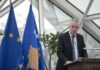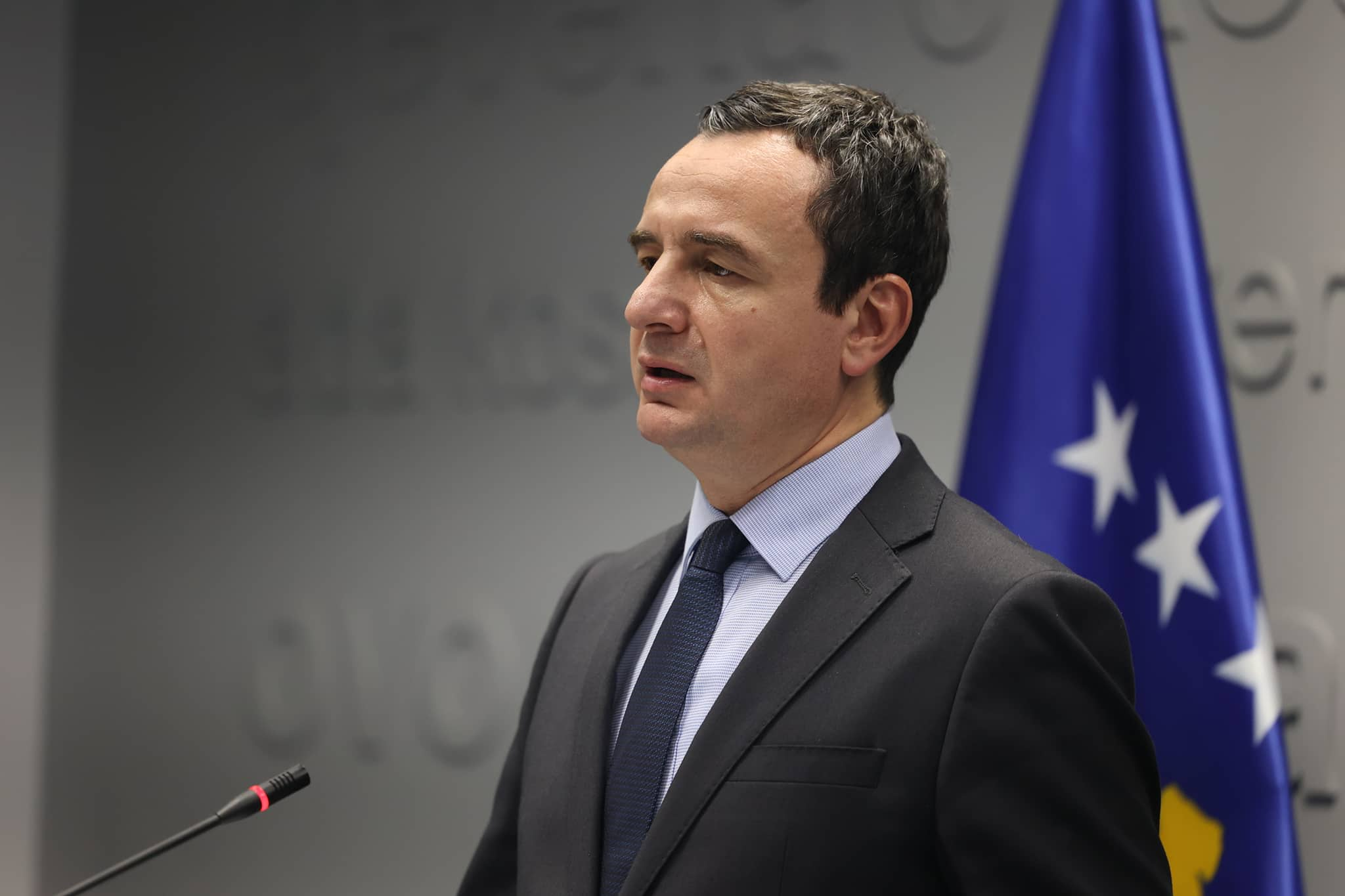
As Kosovo prepares for autumn local elections, outgoing Prime Minister Albin Kurti has ramped up rhetoric focused on the north and Serbia — increasingly framing Belgrade as a persistent security threat while portraying his own government as a stabilizing force that has allegedly diminished foreign influence and enhanced national security.
In a weekend-long social media campaign, Kurti highlighted arrests over the past year of individuals allegedly involved in espionage on behalf of Serbia’s intelligence agency, BIA. In a Facebook post on Saturday, he accused Serbia of „continuous efforts to destabilize the situation“ in Kosovo.
By Sunday, his focus had expanded, but the narrative remained consistent: Belgrade as a malign actor, and Pristina as the responsible agent of security and order — particularly in the Serb-majority north.
“Thanks to institutional coordination, professional cooperation, and operational interaction between our country’s intelligence, security, and judicial bodies, national security has been significantly strengthened,” Kurti wrote.
It has expanded across the territory and increased like never before
The „Most Pro-Russian Location“
Kurti claims that ongoing operations have improved security, especially in the four northern municipalities, where, he says, threats were historically highest due to Serbia’s influence and what he described as an „asymmetric“ response by Kosovo’s institutions in the past.
According to him, recent progress includes a reduction in Serbia’s capacity to destabilize the region, greater law enforcement, free movement, and the weakening of so-called illegal structures operating in the North.
Kurti went further to label the North of Kosovo not only a former hub for Serbian „terrorists and criminals,“ but also „one of the most pro-Russian locations.“
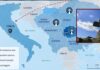
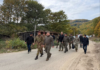
The Prime Minister pointed to what he described as “significant and continuous progress” in dismantling Serbia’s alleged destabilizing mechanisms in the region. Achievements he cited include the removal and prevention of barricades, countering criminal and terrorist groups, dismantling illegal institutions, fighting smuggling and closing illicit roads, and the designation of Civil Protection and the so-called “Northern Brigade” as terrorist organizations.
Kurti also referenced the September 2023 armed attack in Banjska, calling Kosovo’s response to it “successful” and its handling of the subsequent damage “efficient.”
Fleeing Suspects and Weapon Seizures
He further claimed that Kosovo’s security efforts have forced members of “terrorist groups,” illegal security structures, and organized crime networks — allegedly tied to Serbia and Russia — to flee the country.
“Significant quantities of weapons were localized and confiscated in the North,” Kurti wrote, adding that this too contributed to enhanced security.
From Assassinations to „Soft Pressure“
Kurti went on to describe what he sees as a shift in Serbian interference in Kosovo’s elections. He claims that while Belgrade previously used tactics such as “assassinations and physical violence against political opponents and voters,” it now relies on “financial conditioning” and milder forms of pressure.
This, he argues, was reflected in recent parliamentary elections, where he noted a decline in support for Srpska Lista, the dominant Belgrade-backed Serb political party in Kosovo.
“More than 20% of Serbs did not vote for Srpska Lista, which no longer controls the 10 reserved seats in the Assembly,” Kurti wrote.
Despite these shifts, he maintained that Serbia remains “a serious threat to Kosovo” and accused it of continuing to deploy “security mechanisms, terrorist and criminal groups, disinformation campaigns, and other hybrid threats.”
Russia, China, and Iran
Kurti also focused on Kosovo’s efforts to counter foreign malign influence, especially from Russia, China, and Iran.
While claiming their overall influence is lowest in Kosovo compared to the rest of the region, he warned of ongoing challenges. He emphasized Russia’s alignment with Serbia and said their coordinated actions aimed to destabilize the region, adding that “the threat from Russia remains high.”
Kurti highlighted increased cooperation among Kosovo’s institutions and continued partnerships with strategic allies. He also pointed to the strengthening of intelligence, defense, and security capacities — both in human resources and technology — as crucial to confronting threats and improving national safety.
“Religious Extremism and Radicalization Successfully Suppressed”
The Prime Minister concluded by touching on religious extremism, stating that terrorism motivated by religion had been „successfully suppressed“ and that the current threat level is low.
However, he cautioned that the risk of spreading radical ideologies remains at a “medium” level, citing illegal mosques, online radicalization, diaspora influence, and prisons as sources of concern.
Kurti’s statement was accompanied by a summary of government decisions and law enforcement operations dating back to 2021, including the license plate dispute, the prohibition of Serbian referendums held in Kosovo, and the most recent closure of the Ibar regional water company in North Mitrovica, along with the dissolution of several provisional institutions.
Preuzimanje i objavljivanje tekstova sa portala KoSSev nije dozvoljeno bez navođenja izvora. Hvala na poštovanju etike novinarske profesije.