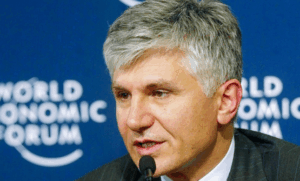
More than two decades after his assassination, former Serbian Prime Minister Zoran Đinđić remains one of the country’s most influential and contested political figures. Admired by supporters as the architect of Serbia’s post-Milošević reforms and criticised by opponents for some of his government’s policies, his political legacy continues to shape debates on democracy, European integration, transitional justice and Kosovo.
Born on August 1, 1952, in Bosanski Šamac, then part of the former Yugoslavia, Đinđić was a philosopher before entering politics. He graduated from the Faculty of Philosophy at the University of Belgrade and earned his doctorate in 1979 at the University of Konstanz in Germany under the supervision of renowned German philosopher Jürgen Habermas.
He entered politics in the late 1980s, as Yugoslavia was beginning its transition towards a multi-party political system. In 1989, he was among the founders of the re-established Democratic Party, becoming one of Serbia’s most prominent opposition politicians during the following decade.
From Philosophy to Politics
Unlike many politicians of his generation, Đinđić came from academia rather than the party establishment. He argued that democratic change required not only replacing governments but also building functioning institutions capable of transforming Serbian society.
Throughout the 1990s, he emerged as one of the leading opponents of Slobodan Milošević. His political career evolved from opposition activism during the wars of the former Yugoslavia to efforts to unite democratic parties against Milošević’s government.
In 1997, following months of mass opposition protests over disputed local election results, Đinđić became Mayor of Belgrade. Although his term was relatively short, it further strengthened his position as one of Serbia’s leading opposition figures.
Democratic Changes and Reform Agenda
Đinđić played a central role in the Democratic Opposition of Serbia (DOS), the broad coalition that defeated Milošević following the presidential elections and political changes of October 2000.
On January 25, 2001, he became Prime Minister of Serbia, leading the country’s first democratic government after the fall of Milošević.
His administration launched an ambitious programme of political, economic and institutional reforms aimed at rebuilding a country emerging from a decade of wars, international isolation, economic decline and political instability.
The reforms included changes to public administration, the judiciary and the economy. While supporters argued that rapid reforms were essential for Serbia’s recovery and integration into Europe, critics maintained that many changes were implemented too quickly and without sufficient political consensus.
One of the most controversial issues during his tenure was cooperation with the International Criminal Tribunal for the former Yugoslavia (ICTY), particularly regarding the extradition of former Serbian and Yugoslav officials to The Hague, a policy that deeply divided Serbian society.
Assassination
On March 12, 2003, Đinđić was assassinated outside the Serbian Government building in Belgrade while serving as prime minister.
His killing shocked Serbia and the international community. The Serbian government declared a state of emergency and launched „Operation Sabre“, a large-scale police operation targeting organised crime groups and individuals suspected of involvement in the assassination.
The murder is widely regarded as one of the most significant attacks on Serbia’s democratic institutions since the political changes of 2000.
For many observers, the assassination represented an attempt to halt the country’s reform process and weaken state institutions. Others have argued that it also exposed the deep political, institutional and security challenges Serbia continued to face during its democratic transition.
Kosovo and His Political Legacy
More than twenty years after his death, Đinđić remains one of the most debated figures in modern Serbian politics.
Supporters remember him as a reformer who sought to modernise Serbia, strengthen democratic institutions and move the country closer to European standards. Critics point to controversial decisions made during his government and argue that many of the reforms he initiated remained unfinished.
Kosovo remained one of the central political issues during his time in office. In the final months of his life, Đinđić argued that Serbia needed a clearer and more proactive policy on Kosovo. In early 2003, shortly before his assassination, he sent letters to several world leaders calling for the issue of Kosovo’s future status to be placed on the international agenda, warning against what he described as the risk of a de facto independent state emerging without negotiations.
Although his time in office lasted just over two years, Đinđić left a lasting mark on Serbia’s modern political history. His reform agenda, his vision of institutional change and the circumstances of his assassination continue to influence political debate in Serbia more than two decades later.
Preuzimanje i objavljivanje tekstova sa portala KoSSev nije dozvoljeno bez navođenja izvora. Hvala na poštovanju etike novinarske profesije.