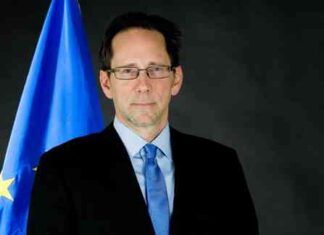
Javier Solana, the Secretary General of NATO during the NATO intervention in Serbia in 1999 wrote for Project Syndicate an opinion on the current situation in the Balkans. In the text, Fresh Momentum for the Balkans, Solana expressed mild optimism for the region, even inferring it might turn the tide in an increasingly chauvinistic international scene. In his view, the catalyst of this possibly positive change in the region is the Prespa Agreement between Greece and Macedonia.
“There can be little doubt that the last few decades have brought more frustration than progress to the Balkans. It would be ironic and deeply gratifying to see a region wracked by ethnic nationalism build bridges when so many others are building walls,” states Solana.
“As autumn comes to Europe, it is time to reap the fruits of months of hard diplomatic work across the Balkan Peninsula. On September 30, the former Yugoslav Republic of Macedonia (FYROM) will hold a consultative referendum that could lead the country to change its name to ‘Republic of North Macedonia'“ – he says.
If successful, Solana adds, the referendum will be a first step in putting an end to a 27-year old dispute and open a way for Macedonia to join the EU and NATO. Following the referendum results, Macedonian Parliament would also have to vote to amend the Constitution and Greece will also have to organise a referendum. However, both are more likely to pass if the Macedonian referendum is positive, states Solana.
The Prespa Agreement and a particular statement in this agreement serve as an inspiration for the region entangled in stalemate disputes, claims Solana and quotes: “In the age of the new industrial revolution […] the deepening of cooperation amongst States and societies is necessary now more than ever, in particular with respect to social activities, technologies, and culture.”
Javier Solana further adds: “The Balkans – and not only the Balkans – are in need of a new narrative based on people’s real priorities, which is precisely what the Prespa Agreement provides.”
Solana expresses hope that Prespa Agreement might have been an introduction to the resolution of another frozen dispute, that between Serbia and Kosovo. He states that both sides are now, after years of “gradual normalization of bilateral relations” in the negotiations that started back in 2011 aware of the high cost of status quo, adding that “it is not the EU’s prerogative to dictate the terms of the conflict’s resolution, and it is clear that local ownership will be key to any deal”.
However, he urges caution from the negotiators, “Vucic and Thaci’s legacies will largely depend on their willingness to formulate a realistic proposal that aligns with the foundational values of the EU”.
Solana is less optimistic about the developments in Bosnia and Herzegovina (BiH) that is heading to general election set to take place on October 7:
“Having been trapped in a territorial and administrative jumble since the end of the war in 1995, BiH is an exceedingly difficult country to govern. Ethnocentrism continues to dominate its politics, and the current electoral race is no exception.”
“Complicating matters further, the secessionist politician Milorad Dodik, who just served his final term as president of the Republika Srpska (one of the two largely autonomous entities into which the country is divided), has made the disquieting decision to run for BiH’s tripartite presidency. Let us hope that the more constructive spirit pervading the rest of the region finally seeps into BiH, and that inter-ethnic initiatives gain steam, as a large part of Bosnian civil society has long advocated,” concludes Solana.
Preuzimanje i objavljivanje tekstova sa portala KoSSev nije dozvoljeno bez navođenja izvora. Hvala na poštovanju etike novinarske profesije.