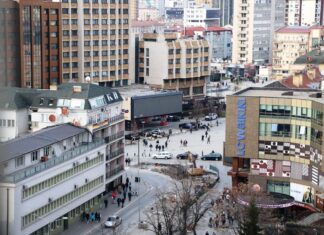
Nearly three years after Serbs from northern Kosovo withdrew from Kosovo’s institutions, life in the four municipalities has changed dramatically, shaped by decisions of the central government in Pristina and local administrations led by Kosovo Albanian officials.
Now, ahead of local elections scheduled for October 12, Serbian political options are signaling a return to the ballot – and possibly the institutions they abandoned in 2022. A new KoSSev survey suggests that many residents support this move, though opinions remain divided.
The online poll, conducted across Facebook, Instagram, and X within a 24-hour window, asked: “Do you support elections and a return to Kosovo’s institutions, which Srpska Lista left in 2022?” Out of 799 respondents, 45.8% (366 people) said yes, 21.2% (170) answered no, while nearly a third – 32.9% (263 people) – declared the issue irrelevant to them.
On Instagram, where most votes were cast (469), results mirrored the overall trend: 44% in favor, 24% against, and 32% indifferent. On X, support was highest, with 52% of 210 users backing a return. Facebook users, however, were more hesitant: just 42% supported rejoining, while 38% said the matter did not concern them.
“The Only Option”
Many who backed participation argued it was the only way for Serbs in the north to retain political representation.
“If we don’t vote, others will decide about our lives. Serbs must have their representatives, however difficult the situation is,” one respondent wrote. Another echoed: “It wasn’t the right choice in 2013, but now we must.”
Some went further, framing participation as a chance to elect “legitimate representatives” rather than, as one comment put it, “Kurtis’ loyalists who filled the empty seats after 2022.” Others blamed Belgrade for the withdrawal in the first place, arguing it opened space for Albanian officials to take over key local positions.
Skepticism Toward Srpska Lista
Still, even among those who support returning to institutions, a large number expressed opposition to Srpska Lista – the dominant Serb political party in Kosovo and a close ally of the Serbian government.
“Yes, but without Srpska Lista,” several wrote, calling its leaders “blackmailers,” “traitors,” and “people who enriched themselves while ordinary Serbs suffered.” Some proposed new initiatives of “honest citizens” instead of the established party.
Voices of Opposition
Meanwhile, more than one-fifth of respondents rejected any return to Kosovo institutions altogether.
“To go back would be like cancer returning to a cured patient,” one wrote. Another described cooperation with Pristina’s institutions as “collaboration with terrorists,” calling instead for Serbia to turn to Russia.
Albanians Join the Debate
The poll also drew comments from Albanians, some warning Serbs not to repeat “the mistake of voting for Srpska Lista,” while others engaged in sharp exchanges over issues such as the Association of Serb-Majority Municipalities.
What’s at Stake
Currently, northern Kosovo municipalities are governed by officials from Vetëvendosje and the Democratic Party of Kosovo (PDK), who were elected in extraordinary 2023 elections largely boycotted by Serbs. These officials include Lulzim Hetemi in Leposavic, Erden Atić in North Mitrovica, Izmir Zeqiri in Zubin Potok, and Ilir Peci in Zvecan.
This October’s elections could reshape local governance if Serb participation is higher, with both Srpska Lista and emerging initiatives expected to compete.
Despite differences between the major Albanian parties now in power, residents have pointed out one shared feature of local governance: lack of transparency and disconnection from citizens’ everyday needs. Whether a renewed Serb presence in institutions will alter that remains to be seen.
Preuzimanje i objavljivanje tekstova sa portala KoSSev nije dozvoljeno bez navođenja izvora. Hvala na poštovanju etike novinarske profesije.