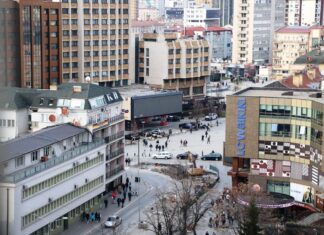
North and South Mitrovica have formally established a Joint Committee – a move facilitated and overseen by Kosovo’s caretaker Prime Minister Albin Kurti and Interior Minister Xhelal Sveçla. This initiative comes after Kurti met separately with local leaders from both municipalities earlier this week, during which he emphasized the importance of inter-municipal cooperation.
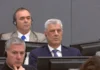
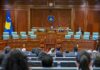
The founding meeting took place today at the Department of the Ministry of Local Government Administration, located in North Mitrovica. In addition to Kurti and Sveçla, attendees included North Mitrovica Mayor Erden Atiq, South Mitrovica Deputy Mayor Arian Tahiri, and members of the newly formed committee.
Sveçla: A legal mechanism for cross-municipal cooperation
Minister Sveçla stated that the formation of the Joint Committee is grounded in the Law on Administrative Boundaries and serves as a “new model of institutional cooperation aimed at improving the daily lives of citizens.”
“The establishment of a Joint Committee between the Municipality of North Mitrovica and the Municipality of South Mitrovica ensures close cooperation and a functional mechanism for implementing joint projects,” he said in a statement.
According to him, the committee will focus on infrastructure, environment, economic development, and municipal services.
“Through coordination in key areas… this committee will provide a concrete mechanism for implementing joint projects, building trust, and increasing efficiency, demonstrating that past divisions can be overcome,” said Sveçla.
He also confirmed that the committee will operate under the supervision of a representative appointed by the Prime Minister, emphasizing equal participation from both municipalities.
Atiq: Coordination essential for avoiding unilateral disruptions
The announcement coincided with a session of the North Mitrovica municipal assembly, where Mayor Erden Atiq was present. Speaking to the press, Atiq revealed that the committee includes five members from each municipality, plus one appointed by Kurti.
He described the committee as a component of the Brussels Agreement, which he said had not been implemented before due to a lack of unity among previous local leaders.
“In order to be part of the committee, we must be a municipality – not merely an administrative office,” Atiq clarified, addressing speculation that the move could signal the dissolution or unification of North Mitrovica.
He explained the practical benefits of the committee:
“This cooperation is important so that one municipality does not take steps that create problems for the other.”
Atiq added that this model was suggested in the Ahtisaari Plan and Brussels Agreement and reflects longstanding proposals for inter-municipal coordination in a city uniquely divided between two local governments.
Ahtisaari Plan revisited – from rejection to implementation
Under the Ahtisaari Plan, the creation of such a committee was explicitly proposed as a mechanism to manage shared issues between North and South Mitrovica, which remain divided along ethnic lines. The envisioned structure included five representatives from each municipality, chaired by the International Civilian Representative (ICO).
The plan formed the legal and institutional backbone of Kosovo’s supervised independence and contained specific provisions for protecting non-Albanian communities, particularly in sensitive areas like Mitrovica.
Ironically, Kurti’s own Vetëvendosje (Self-Determination) Movement – which built much of its early popularity opposing the Ahtisaari Plan and the Brussels Agreement – is now implementing provisions derived directly from them. The party was long associated with slogans such as “Jo negociata” (No negotiations) and “Jo Zajednica” (No Association) and actively resisted the incorporation of international plans into Kosovo’s legal framework.
Even after assuming office, Kurti maintained in interviews that Kosovo’s constitution lacked full legitimacy because it was adopted under international pressure.
Now, however, his government is directly invoking and implementing elements of that same plan.
Local elections in Kosovo are scheduled for October 12, adding additional political weight to the formation of the committee and the revival of inter-municipal coordination efforts in Mitrovica.
Preuzimanje i objavljivanje tekstova sa portala KoSSev nije dozvoljeno bez navođenja izvora. Hvala na poštovanju etike novinarske profesije.