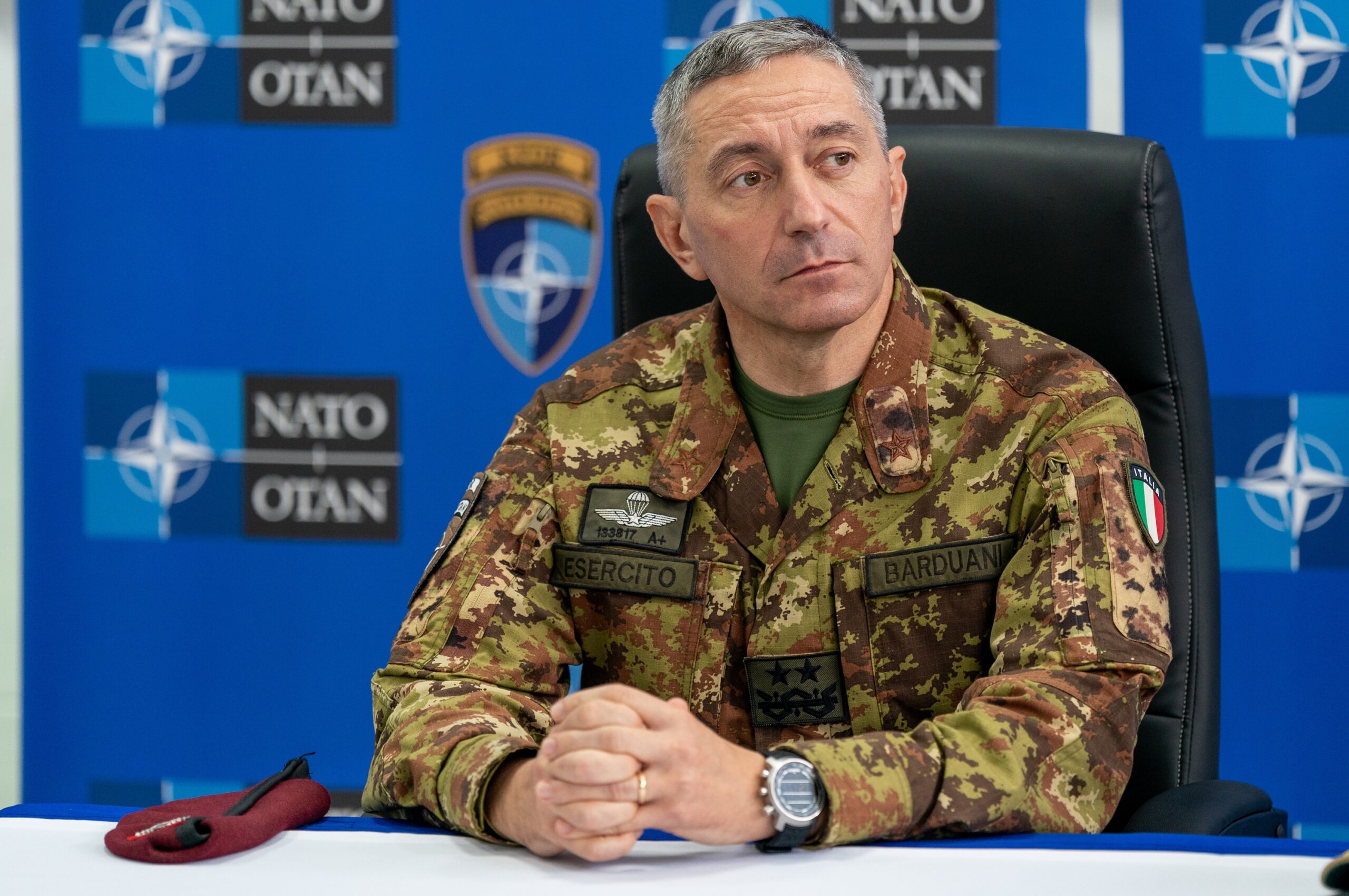
General Enrico Barduani, KFOR Commander, confirmed in an interview for KoSSev that he did not authorize the Kosovo Security Force (KSF) deployment after the sabotage of the Ibar-Lepenac canal. He clarified that, in the case of the Banjska incident, no such request was received.
Assessing the current situation in Kosovo, Barduani described it as calm yet fragile, with a risk of potential escalation. „Isolated incidents can still occur. Preventing such incidents entirely is challenging, as they often involve criminal or terrorist elements acting covertly and unpredictably,” he emphasized.
The interview with General Barduani was conducted in written form.
What has the investigation into the Ibar-Lepenac case shown so far?
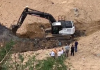
We strongly condemned the attack on the water pipe in Zubin Potok on November 29 which had a severe impact on water and electricity supplies in northern Kosovo, and as such affected local communities. We made it clear that it is essential to establish the facts,hold those responsible accountable, and bring them to justice. Ensuring accountability is crucial, and the Kosovo Police is in lead for the investigation. While the facts are being established, it is important to avoid inflammatory rhetoric and actions that could raise tensions, as this would be detrimental to security and stability in Kosovo and the region.
“KFOR does not have an investigation role – as law enforcement does not fall within the realm of our mandate – but we continue to contribute to security across Kosovo, in accordance with our long-standing UN mandate. I would also add that, over time, thanks to progressive improvements in the situation, many reponsibilities have been transitioned to the Kosovo’s security organisations. In this respect, KFOR works in close coordination with the Kosovo Police and the European Union Mission on Rule of Law in Kosovo (EULEX), in accordance with their respective roles as security responders.”
When the President of Serbia repeats that the evidence at the scene is contaminated, is that accurate? How it is possible that KFOR, or NATO, is not involved in the investigation of such a significant act of sabotage on territory it securely controls, at a time when there are security crises that are especially important for NATO?
As I mentioned, the priority now is to establish facts through a thorough and transparent investigation, bring those responsible to justice, and ensure that local communities continue to receive essential services. It is also crucial to avoid any inflammatory rhetoric or actions that could raise tensions, as this would undermine security and stability in the region and negatively affect all communities. KFOR remains committed to preserving a safe and secure environment, for the benefit of all people living in Kosovo, while law enforcement and investigations are the responsibility of the Kosovo Police. The investigation is ongoing and we hope it will soon bear fruitful results.
Could it happen that NATO members individually are carrying out investigation?
Any investigative support provided by individual countries to the Institutions in Kosovo falls within bilateral or multilateral arrangements of cooperation.
How could such an attack occur in an area controlled by NATO, after numerous statements assuring control over the situation on the ground, especially given the heavy presence of Kosovo special police forces?
KFOR operates under its UN mandate to contribute to a safe and secure environment for all people living in Kosovo. Law enforcement, crime prevention, and investigations are the primary responsibility of the Kosovo Police. KFOR complements these efforts through its presence and monitoring, standing ready to intervene when the magnitude of a threat exceeds the capabilities of the local security actors. The situation in Kosovo remains calm, but fragile, while repeatedly exposed to potential escalation. While KFOR ensures overall stability, isolated incidents can still occur. Preventing such incidents entirely is challenging, as they often involve criminal or terrorist elements acting covertly and unpredictably.
It is also worth noting that the Kosovo Police responded promptly to address the situation. Investigations are underway to determine the facts and we remain focused on preventing any escalation while supporting the Institutions in Kosovo and the Kosovo security organisations in maintaining stability and security.
Did KFOR arrive at the scene rapidly due to the request of the Kosovo Prime Minister to send the KSF in the North? How confident are you that the Kosovo authorities will refrain from sending the KSF to the North by 2028, and how certain are you that you will not allow this after 2028?
Following the explosion, KFOR promptly deployed units to secure the Zubin Potok area around the damaged water canal and offered engineering, logistical and safe explosive ordnance disposal support to the Institutions in Kosovo. In line with the 2013 commitment by the Institutions in Kosovo to NATO, any mission of the Kosovo Security Forces (KSF) in northern Kosovo requires prior authorization from the KFOR Commander. We welcome Kosovo’s continued respect to this commitment. Such authorisation was not provided in this instance, based on our security assessment and the actions already undertaken by the Kosovo Police to manage the situation, with support from the EU Rule of Law mission (EULEX) and KFOR. KFOR remains committed to providing security for the water canal and surrounding areas, and to provide support to the Institutions in Kosovo, as needed.
Are there similarities between the Banjska case and Ibar-Lepenac sabotage? Did Mr. Kurti requested the KSF deployment in the north after Banjska case?
The Banjska case and the Ibar-Lepenac sabotage are separate incidents, each requiring independent investigations to establish the facts and determine responsibility. Drawing comparisons between the two would be premature without thorough findings from the relevant authorities.. As I said, KFOR remains focused on preserving security and stability for all people living in Kosovo. Following the Banjska case, KFOR did not receive any official requests from the Institutions in Kosovo, for the deployment of the Kosovo Security Forces (KSF) to the north. KFOR continues to closely monitor the situation in northern Kosovo, ensuring a safe and secure environment, supporting local institutions, and maintaining impartiality while being fully prepared to address any security developments.
If the Kosovo authorities have been acting here on the ground here as if in a state of emergency for a prolonged period, why hasn’t KFOR been more actively involved as well?
As I said, immediately after the event, KFOR personnel have been providing security to the water canal and to the surrounding areas. Furthermore, KFOR has offered logistical, explosive ordnance disposal and engineering support to the Institutions in Kosovo. We also increased our presence not only at Zubin Potok but around different critical infrastructures to avoid any escalation and further incidents. Our primary objective remains to prevent any further risk of tensions or violence, through regular patrols and engagements with local communities across Kosovo.
“As you know, due to the evolving security situation, in 2023 NATO decided to increase the number of KFOR troops, through the deployment of reserve forces. Nowadays, the manning of KFOR is adequate to handle the current situation and to continue fulfilling effectively our UN mandate, at all times and impartially. Should the situation deteriorate, NATO has the capacity to promptly reinforce the KFOR mission, through different echelons of reserve forces.”
Do you draw any parallels between the conflict in Ukraine and Kosovo, as Pristina regularly does?
It is not up to me to draw parallels in this regard. My priority is to ensure that the KFOR mission remains fit for purpose and continues to implement our long-standing UN mandate, based on UN Security Council Resolution 1244 of 1999 to contribute to a safe and secure environment for all communities and people living in Kosovo, at all times and impartially.
The elections are approaching. It is an open secret that Prime Minister Kurti intended to hold the elections in September after reopening the main bridge. It is also an open secret that the international community prohibited the opening of the Main Bridge over Ibar for traffic. Could a deja vu situation occur before February 9th? And what is your opinion on reopening the main bridge this winter?
NATO’s position on the Ibar River Bridge has always been clear, consistent, and transparent: any decision in this regard must be taken through dialogue and in timely and effective coordination with the International Community and KFOR. The removal of KFOR troops would be linked to such a decision and to a thorough assessment of the security situation. It would also require proper authorizations by higher NATO Commands. Meanwhile, KFOR will maintain its fixed presence on the bridge and will continue to conduct regular patrols in the surrounding areas. Additionally, we recently carried out training exercises on the bridge to increase KFOR readiness in response to any crisis.
“I want to emphasize that the opening of the bridge to vehicle traffic requires a political solution, not a military one. In addition, it is critical to point out that the eventual opening will be possible only when certain conditions are in place that guarantee the acceptance of this measure by all the communities involved.”
Although the bridge is not officially open to traffic, the community in the North sees that pressure from the Kosovo authorities has shifted to what is so called „Plan B“ — the mass crossing of pedestrians from the South, with a particular focus on the deployment of reportedly LVV activists and business in the pedestrian zone. What I often hear from my fellow citizens is their fear that a bigger incident has been avoided in this area only due to the currently colder weather, but as spring approaches, which has historically always been a hot period on Kosovo, this situation could change. What are your forces observing on the ground? And what guarantees can you provide to maintain both security and peace?
At this time, we will not speculate on any future developments. However, after the dangerous events of 2023, KFOR watches carefully the situation in northern Kosovo. We remain vigilant to identify and manage any possible threat. With that, I am confident that we are well postured to respond to any security challenge, including in northern Kosovo.
“Our presence on the bridge is without a doubt a powerful deterrent; we patrol constantly to maintain our awareness and we have measures and plans in place to address any potential crisis scenario. KFOR will maintain its fixed presence on the bridge and will continue to conduct regular patrols in the surrounding areas. In addition, we will continue to ensure that our mission remains well resourced and well postured to implement our long-standing UN mandate.”
What are your predictions for this New Year? Do you exclude any possibility that we might witness another major security incident in the North?
Speculating on future scenarios is not productive. KFOR has the resources and capabilities to respond to any potential security threats in coordination with the Kosovo Police and EULEX, in their respective roles as security responders. KFOR has already demonstrated that it can rapidly adapt its strength, in response to relevant developments on the ground. So, any changes in KFOR’s presence and posture will continue to be done based on an assessment of the security situation.
For this very end, what can tell us about your cooperation with the Serbian Army?
As KFOR commander, I have regular interactions with all my counterparts of the neighbouring countries, including the Chief of Staff of the Serbian Armed Forces, whom I met shortly after I assumed the command of the KFOR mission, last October, and with whom I am in constant contact. We reach out to each other when we have specific issues to talk about. We discuss a range of topics, including security and stability in the Western Balkans. Last time, I reiterated the strategic importance of this region and the key role of political dialogue in mitigating tensions and ensuring long term stability. We also discussed existing cooperation to monitor and secure the respective sides of the Administrative Boundary Line. At this time, I have every reason to expect this to continue and I count on their constant cooperation in this regard. At the same time, KFOR continues to be present to monitor any activity along the Administrative Boundary Line, in accordance with its long-standing UN mandate.
Author: Tatjana Lazarević
(The interview was conducted in writing, without follow-up questions or insistence on specific answers.)
Preuzimanje i objavljivanje tekstova sa portala KoSSev nije dozvoljeno bez navođenja izvora. Hvala na poštovanju etike novinarske profesije.