The Kosovo government has approved a proposal to establish a working group tasked with creating the “Museum of Genocide and Freedom.” The decision was made during the government’s 238th session, where the proposal was presented by Kosovo’s Minister of Culture, Hajrulla Çeku.
According to Çeku, the museum aims to document crimes committed by the former Yugoslavia and Serbia against Albanians and other communities in Kosovo.
“The Museum of Genocide and Freedom seeks to educate, commemorate, and honor generations, presenting the stories and experiences of survivors,” Çeku stated during the session.
He emphasized that the museum’s broader objective is to foster lasting peace by preserving the memory of what he described as a “violent past.”
Initially, the museum will operate as a special unit within the National Museum. Once the Museum Law is enacted, it will become an independent institution.
Kosovo Prime Minister Albin Kurti expressed his support for the initiative, describing it as a dignified tribute to collective memory.
“This museum institutionalizes our collective memory and bears witness to the monstrous crimes of genocidal Serbia. It stands as proof that the Republic of Kosovo has triumphed and will not forget,” Kurti remarked.
The proposal was widely supported in the government session, except by Nenad Rašić, the Minister for Communities and Return, and the sole representative of the Serbian community in the government.
Rašić Criticizes Museum Name, Warns Against Generalizations
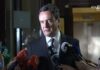
Following the session, Minister Rašić explained his reasons for abstaining from the vote. He criticized the museum’s proposed name and the generalization of crimes, arguing that every crime should be attributed to specific individuals, not entire states or nations.
“The name ‘Genocide of Serbia and Yugoslavia’ is inappropriate. Every crime has a name and a perpetrator; it should not be generalized. Labeling an entire state as genocidal is not the way forward,” Rašić told reporters.
He suggested alternative names that would avoid implicating the entire Serbian state, such as “Genocide in War,” “Crimes by War Criminals,” or “War Crimes and Atrocities.”
Rašić argued that such formulations would better reflect the realities of the past without stigmatizing an entire nation.
The „Genocide Museum,“ or the museum for war crimes, is included in the Kosovo government’s Transitional Justice Strategy, which was adopted this year. Although Serbian representatives were active members of this working group for almost four years, they later criticized the document.
Kosovska vlada usvojila predlog odluke o osnivanju „muzeja genocida“, Rašić uzdržan
Preuzimanje i objavljivanje tekstova sa portala KoSSev nije dozvoljeno bez navođenja izvora. Hvala na poštovanju etike novinarske profesije.