The football pitch became a battleground for national identities during the UEFA Nations League match between Romania and Kosovo in Bucharest on Friday evening. What began as a competitive game ended in chaos and controversy, with sharp political overtones further straining relations between the two nations. Following the match, Kosovo Prime Minister Albin Kurti echoed a statement made by Kosovo captain Amir Rrahmani, declaring, “Kosovo is Kosovo, or Kosovo is Albania.”
The match itself, a high-stakes encounter in League C, was abandoned in the 93rd minute after Kosovo’s players walked off the field following chants of „Serbia! Serbia!“ from Romanian fans—a direct challenge to Kosovo’s political status. This followed earlier tensions, including symbolic gestures by Kosovo’s players and a heated altercation between Kosovo captain Rrahmani and Romanian striker Denis Alibec.
A Heated Match Turns Political
What initially seemed to be a tense but routine 0-0 draw—favorable to Romania’s bid for promotion to League B—soon escalated into a political dispute, as provocative chants from the stands and the players’ subsequent actions shifted the focus from sport to geopolitics. Kosovo’s players refused to resume play despite attempts to mediate, citing an „unacceptable and unsafe atmosphere.“
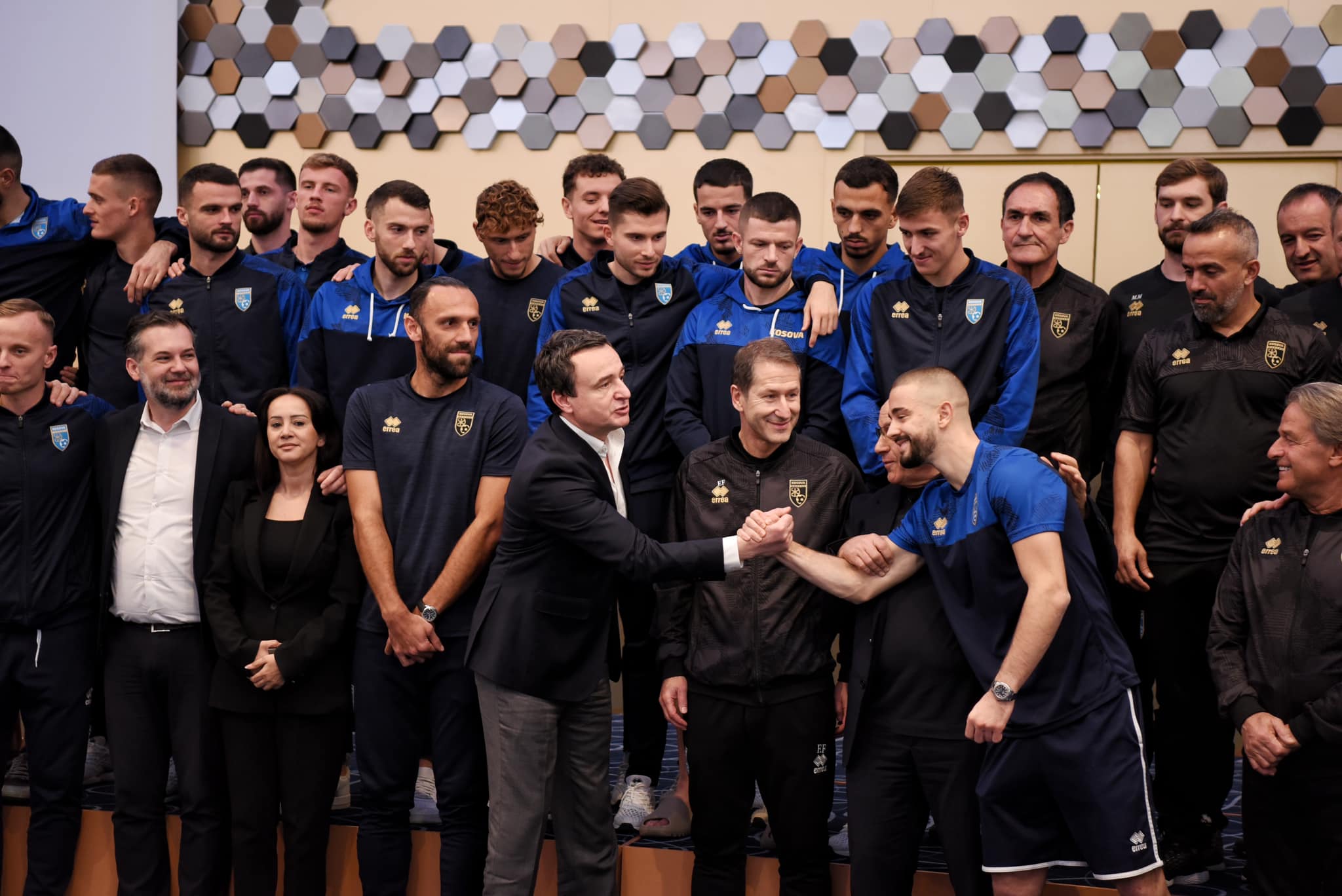
Prime Minister Kurti framed the players’ actions as a principled stand, hosting them for a celebratory reception in Pristina.
„Football is more than just a game,“ Kurti said, reaffirming the significance of the players’ actions.
„Football isn’t just a game; it’s also a form of representation,“ he continued. „That’s why I invited our players today, who make us proud every time they step onto the field, to congratulate them on their impressive and dominant performance against Romania, and to express my full solidarity with their principled, correct, and positive stance—both for Kosovo and for football.“
At the special reception for the national football team held at a hotel in Pristina, Kurti praised their performance in Bucharest.
„You dominated the field there, and at the same time, I want to express our complete solidarity with the position you took. It was a principled, correct, and constructive stance—one that benefits both Kosovo and football, and every citizen of our country who felt represented by the statement and stance of captain Amir Rahmani. I congratulate you all and thank you from the bottom of my heart,“ Kurti said.
With a smile, Kurti expressed his particular satisfaction after reading the statement by Kosovo’s captain, who said: „Everyone needs to know that Kosovo is Kosovo, or Kosovo is Albania.“
„I’ll end my speech by quoting Amir Rahmani exactly: ‘I want to send a message to UEFA and FIFA, urging them not to allow such things. Kosovo has endured a difficult past—war, massacres, and much more. It hasn’t been easy to get here, and so we deserve respect. Everyone must know: Kosovo is Kosovo, or Kosovo is Albania. That’s it. It ends there.’“
Minister Hajrulla Çeku Joins the Praise
Minister of Youth, Culture, and Sport, Hajrulla Çeku, also had words of praise. He joined Prime Minister Kurti and other officials on Sunday to welcome the football team.
„Together with Prime Minister Kurti, today we met with the Kosovo football players. We expressed our full solidarity and support following the match against Romania, and congratulated them on their dignified representation of our country. We wish them much success in the upcoming match against Lithuania,“ Çeku said, echoing Kurti’s sentiments.
UEFA Investigations and Diplomatic Fallout
The incident has drawn the attention of UEFA, which announced investigations into the conduct of both the Romanian and Kosovo football federations. Kosovo’s Football Federation has accused Romanian fans of “racist and provocative behavior,” including chants and interruptions during Kosovo’s national anthem.
Romanian authorities, meanwhile, have rejected these accusations, emphasizing the need for fair play and mutual respect. They expressed disappointment over Kosovo’s decision to leave the pitch, accusing the team of overreacting intentionally.
The Romanian Football Federation denied allegations of racist chants, claiming there was no incitement to violence or offensive slogans. They labeled the walkout as unsportsmanlike and disrespectful to the spirit of fair play.
“Leaving the pitch without the referee’s permission is a lack of respect for football itself,” the federation stated. Romanian players, meanwhile, thanked their fans for their support, describing the evening as a symbol of unity and pride. Authorities reported that 13 spectators were fined, with nine receiving bans from sporting events for up to a year.
Adding to the complexity is the recent history of volatile encounters between these teams. UEFA had penalized both nations earlier for incidents during previous matches, highlighting the deeply rooted tensions that transcend football.
Meanwhile, tensions that started on the pitch on Friday quickly spilled over onto social media and into the media. A full-fledged information war has erupted between the Romanian and Kosovan sides, with each accusing the other of misconduct. On one side, there are claims that the Albanians behaved inappropriately, while on the other, similar accusations are being leveled against the Romanians.
This is how the Kosovo* team left the locker room after the match against Romania.
Literal gypsies. pic.twitter.com/ClqzWD6f7Z
— Daily Romania (@daily_romania) November 16, 2024
Shamefully edited this after alleging it was Kosovo staff throwing the word, which is not the case. https://t.co/uiNTiqL92v
— Xhemajl Rexha (@xhemajl_rexha) November 16, 2024
Preuzimanje i objavljivanje tekstova sa portala KoSSev nije dozvoljeno bez navođenja izvora. Hvala na poštovanju etike novinarske profesije.