In a new escalation of tensions between Kosovo and Serbia, Kosovo’s Minister of Culture, Hajrulla Çeku, and Prime Minister Albin Kurti have issued fresh accusations, claiming that Serbia committed „cultural genocide“ during the 1999 conflict. This marks a significant addition to the ongoing charges of genocide and war crimes directed at Serbia by Kosovo’s leadership.
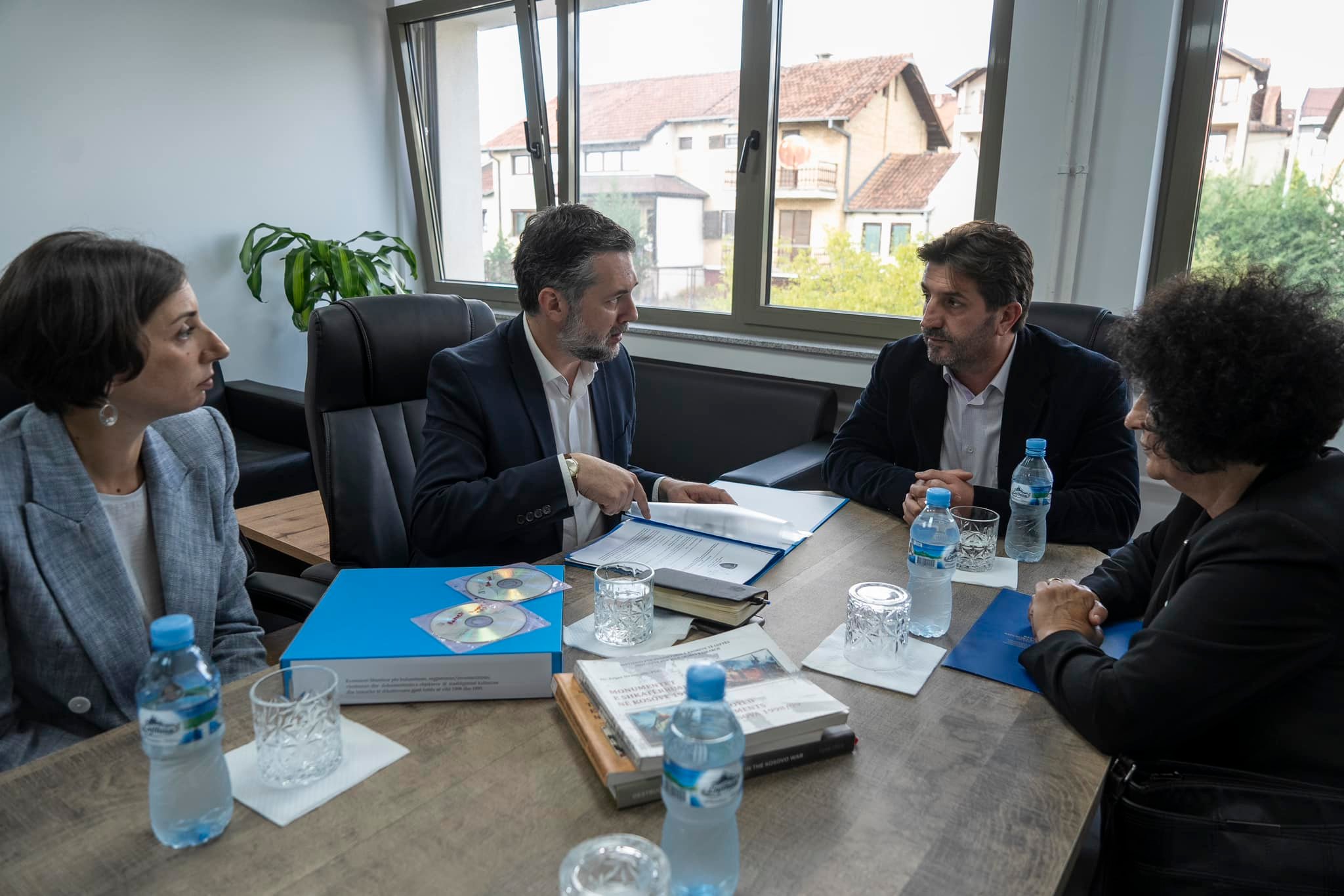
Çeku announced late last night on Facebook that a report had been submitted to the Institute for Documenting War Crimes, a body established to investigate atrocities committed during the Kosovo War.
Çeku, together with a commission appointed by the Kosovan government, delivered this report, which details alleged destruction and theft of Kosovo’s cultural heritage by Serbian forces.
In a series of claims, Çeku stated that Serbia’s „cultural genocide“ had devastating consequences for Kosovo.
According to him, during the war, Serbian forces not only committed numerous war crimes but also targeted Kosovo’s cultural heritage.
Çeku provided specific figures to underscore the extent of the damage:
“1,784 monuments destroyed, 3,724 artifacts stolen, 175 libraries destroyed, 1.7 million Albanian books destroyed, tens of thousands of archival documents looted, hundreds of artworks either damaged or stolen.”
Kosovo’s Ministry of Culture has been vocal in recent years about the return of these stolen artifacts, asserting that Serbia still illegally holds 1,247 of them.
Çeku reaffirmed the commitment of Kosovo to seek justice and reparations, stating, „We will not stop for a moment in our fight for justice and compensation against Serbia.“
His statements were echoed by Prime Minister Kurti, who also accused Serbia of committing „cultural genocide“ and emphasized Kosovo’s dedication to pursuing truth and justice for all the crimes allegedly committed by „genocidal Serbia.“
The Role of the Institute for Documenting War Crimes
The Institute for Documenting War Crimes in Kosovo was a key electoral promise of the Self-Determination party. By May of that year, efforts were already underway to form a working group to draft the conceptual framework for the institute.
Rapid progress was made, and by November, a director was appointed to oversee the documentation and investigation of war crimes committed during the Kosovo War.
The first official documents were handed over to the institute on February 17, 2024, marking the anniversary of Kosovo’s unilateral declaration of independence from Serbia. Kurti called for further evidence to be submitted to support claims of Serbia’s „genocidal acts“ during the conflict.
Although the Institute has drawn much attention due to its affiliation with Self-Determination, it is not the first body of its kind. An earlier institute for investigating war crimes in Kosovo, established by the government in 2011, was disbanded in 2018 due to a lack of results, with only a few monographs published documenting Albanian casualties and alleged economic and cultural destruction.
The decision published at the time stated that it would be replaced by the „Department of Transitional Justice“ within Kosovo’s Ministry of Justice.
In June 2023, the government approved a Strategy for Transitional Justice, aimed at creating an inclusive document centered on wartime victims.
However, this process has not been without controversy. Serbian civil society activists, particularly from the New Social Initiative, who were involved in drafting the strategy, have criticized the final product for sidelining the contributions of the Serbian community.
These critics have pointed out that the strategy overlooks significant post-war events, particularly the ethnic crimes and human rights abuses committed against non-Albanians between 1999 and 2000.
In response to Kosovo’s renewed focus on war crimes investigations, Serbia established its own database of crimes committed in Kosovo between 1998 and 2000. However, little has been heard about this initiative, which was launched in early 2022, and its impact remains unclear.
Preuzimanje i objavljivanje tekstova sa portala KoSSev nije dozvoljeno bez navođenja izvora. Hvala na poštovanju etike novinarske profesije.