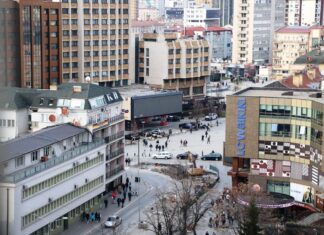
In Northern Mitrovica, the recent push by the Kosovo government to reopen the main bridge over the Ibar River has sparked significant tension and controversy. The bridge, a symbol of deep-seated ethnic divisions, has been closed for 25 years, and its reopening for traffic is now a focal point in Kosovo’s fraught political landscape.
Government Standoff
Today, Kosovo’s Minister of Internal Affairs, Xhelal Sveçla, reiterated that his administration represents all citizens, regardless of their differences.
“We represent not only the citizens who have protested and those who are vocal, but also those who remain silent yet have rights or needs that they do not express. We are, so to speak, representatives of the 11,000 citizens who were displaced from this area on February 4, 2000, and those who were killed on that day, as well as those killed in 2004 and 1999. This means that we defend the interests of everyone, always based on order and law and the Constitution of the Republic of Kosovo,” he said to reporters today at the Ibar Bridge.
For the past two days, Sveçla has been touring the main bridge and stopping for drinks at the newly opened café C’est la vie. The café, formerly known as Dolcevita and located right next to the main bridge on the northern side of Mitrovica, is now owned by an Albanian. It has become a popular gathering spot for officials from the Self-Determination (Vetëvendosje) movement, who frequently post selfies from there on social media.
On both occasions, Sveçla refused to answer questions from Northern journalists in Serbian. Today, it was even more challenging to approach the minister than it was yesterday, as security personnel kept journalists at a distance across the street. Yesterday, Sveçla confirmed that the issue of reopening the bridge is a matter of „expert assessment.“
Media in Albanian, including social media influencers, are writing about the „imminent reopening of the bridge,“ along with reports on the latest government activities to make it happen soon.
These statements come amidst ongoing resistance from the Quint countries (United States, United Kingdom, France, Germany, and Italy), the European Union, and KFOR, who are advocating for a resolution through the Brussels dialogue rather than unilateral actions.
American Ambassador Jeffrey Hovenier, addressing the press outside the Kosovo government building on Friday, underscored the Quint’s joint position against any changes to the bridge’s status at this time.
In a notable shift in Kosovo’s approach to the contentious Ibar Bridge reopening, both the Kosovo government and Prime Minister Albin Kurti issued separate statements last Friday confirming their commitment to ongoing consultations with Western partners. Despite these assurances, recent developments on the ground indicate a strong push by Kurti’s administration to expedite the bridge’s reopening.
Yesterday, media in Pristina, including the President of the Kosovo Journalists Association, reported that Minister of Internal Affairs Xhelal Sveçla, accompanied by two other ministers, conducted an inspection of the bridge as part of preparations for its imminent reopening. This visit, however, was not communicated to Serbian media outlets, who remained unaware of the event, a situation that continued into today.
The government’s proactive stance reflects a broader intention to advance the reopening process despite international and local concerns.
Local and International Reactions
Kurti’s administration has been actively „testing the bridge“ in preparation for its potential reopening.
Minister Sveçla, accompanied by media from Pristina, „inspected“ the bridge yesterday, although Serbian media were not duly notified of this visit. The bridge, once a site of ethnic conflict and violence, remains a potent symbol for local Serbs who view it as a key element of their survival.
Protests erupted in North Mitrovica today at Braća Milić Square, located near the bridge, with Serbian residents voicing their opposition to the reopening. The bridge, they argue, represents a historical landmark that „protected the multiethnic character of Kosovo,“ recalling the role of French KFOR troops in the aftermath of the 1999 war.
Infrastructure Developments
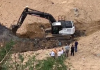
In the meantime, physical changes are underway. Workers are repainting the bridge’s pillars in a cream color, covering the multi-ethnic graffiti that had previously adorned them, following a joint initiative of several civic organizations from both the north and south of Mitrovica.
Although the workers remained silent to our questions on site, according to Koha, the work is being done „voluntarily“ and has received „state authorization,“ with assurances of safety for the workers.
Kosovo authorities have allocated €10,000 for bridge testing, which includes assessments for both passenger and freight vehicles, according to some Pristina-based media reports.
Upcoming Discussions
Northern Mitrovica’s municipality, which was the first to advocate for the bridge’s reopening last year, will host a public discussion tomorrow at 11 a.m. The meeting, focusing on interethnic cooperation and community safety, will include Kosovo’s Minister for Local Government, Elbert Krasniqi, and other key figures from the Ministry of Internal Affairs.
Krasniqi, who accompanied Sveçla today in Mitrovica, emphasized the importance of bridges in fostering connections between communities, framing the current moment as an „ideal time“ for such a development.
Prime Minister Kurti has also urged citizens to participate in the discussion, aiming to address concerns and highlight the benefits of reopening the bridge.
Preuzimanje i objavljivanje tekstova sa portala KoSSev nije dozvoljeno bez navođenja izvora. Hvala na poštovanju etike novinarske profesije.