The government of Kosovo should provide better protection for religious sites, such as graveyards, monasteries, churches, and mosques. The government of Kosovo should ensure the full enforcement of the legal framework on SPZs and address the issue of illegal construction and/or demolitions in protected areas. Also, it should implement all recommendations issued by the Council of Europe, which monitors implementation of the FCPNM in Kosovo, and the UN Special Rapporteur on cultural rights.
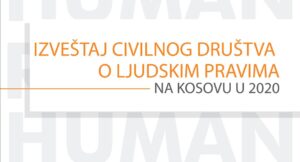
These are just some of the recommendations on the ways to improve property rights, security, and freedom of religion and culture rights listed by 34 CSOs from Kosovo in their report on the human rights situation in Kosovo in 2020.
Kosovo has a robust constitutional and legal framework to promote the realization of cultural rights and protect cultural heritage, although several implementation challenges persisted in 2020, the report reveals.
Enhanced legal protection
The report lists the individual laws that protect these rights, including the additional mechanisms, such as the subsequently adopted Law No. 03/L039 on Special Protective Zones (SPZs) – that creates special zones that provide “enhanced protection for SOC monasteries, churches, and other religious sites and for other historical and cultural sites of special significance for the Kosovo Serb community and other communities in Kosovo,” and Implementation and Monitoring Council (IMC) which monitors compliance with this law.
According to the report, there are 23 religious and other cultural heritage assets under permanent protection and around 1,600 cultural assets under temporary protection. Eight new cultural assets were added to the temporary protection list in October 2020.
Kosovo also has 24 SPZs providing specific cultural heritage sites with enhanced protection and close monitoring by the IMC and 24-hour protection by a multiethnic police unit.
Four religious cultural sites in Kosovo – the Visoki Decani Monastery, the Patriarchate of Pec Monastery, the Church of Holy Apostles, and the Holy Virgin of Ljevise – continued to be recognized and protected as World Heritage Sites by UNESCO.
The reality on the ground
However, despite the legal mechanisms, the report registers adverse events in the field.
“In 2020, members of K-Serb communities continued to be subjected to violence and intimidation when attempting to access religious and cultural sites on pilgrimages or other significant events.”
The report lists numerous such cases, such as the protest held at the beginning of last year when Kosovo Serbs attempted to visit a church in Djakovica. It also recalled what happened a year earlier.
“This may be regarded as a limitation of their constitutional right to the freedom of religion and belief as pilgrims were unable to enter their place(s) of worship,” the CSOs underlined.
“There were also attacks on graveyards and attempts to intimidate and threaten those trying to visit them. Between January and November 2020, three cases of desecration of Serb Orthodox graves were reported in the municipalities of Istog/Istok and South Mitrovica. The failure of the authorities to prevent attacks on religious sites and monuments, as well as ensure access to them, prevented worshippers from practicing their religion and can be regarded as a violation of the right to freedom of religion.”
The report also highlighted the two outstanding problems related to the Visoki Decani monastery – the continuation of the construction of the transit road Decani-Plav and the lack of implementation of the constitutional decision on the return of the monastery land.
“The 2016 decision of the Constitutional Court confirming the SOC’s ownership of the land adjacent to the Visoki Decani Monastery remained unimplemented, impacting property rights of the SOC,” states the section of the report on property rights.
“The resumption of work on the transit road running through the designated SPZ of the Visoki Decani Monastery in July 2020 raised concerns not just for the protection of cultural heritage but also for the respect of property rights and the rule of law, especially against the backdrop of the continued non-implementation of the May 2016 Constitutional Court decision upholding the SOC’s ownership rights to 24 hectares of land surrounding the monastery.”
Following the halting of construction in mid-August and several months of discussions between relevant stakeholders, the IMC endorsed an agreement in November 2020 regarding the simultaneous reconstruction of an international bypass road outside of the Visoki Decani monastery’s SPZ and a road for local traffic only within the SPZ. The IMC underscored that this important new agreement in the field of cultural heritage fully complies with the applicable legal framework and that it will monitor the implementation of the agreement, which seeks to foster “inter-community relations through the protection of religious cultural heritage” while also promoting the economic development of the region and the free movement of people in Kosovo.
There were several reported incidents targeting religious cultural heritage belonging to the SOC and Islamic Community of Kosovo in 2020, the CSOs emphasized.
Incidents affecting SOC property were reported to have taken place in early 2020 in the villages of Novake, Gornje Selo, and Sredska. In April, a fire incident destroyed a 450-year old mosque in Gjilan/Gnjilane, which the municipality condemned in a statement calling it “a criminal act, severely damaging the religious tolerance in the municipality”. In August, an SOC church in Prizren and a mosque in Kacanik were damaged according to the Kosovo Police, while a representative of a mosque in Pec reported to the Kosovo Police that unknown person(s) broke into the mosque and reportedly stole a cash box containing money collected during Friday prayers. The desecration of an SOC church in Obilic was also reported to the Kosovo Police in September.
The report also recalled that Abbot of Visoki Decani Monastery, Father Sava Janjic, expressed his concerns about such incidents and called for renewed efforts to create a society “in which cultural, ethnic, linguistical, religious diversity will be protected and preserved.”
The section of the report concerning cultural rights expressed concern over the continued inadequate administration and protection of cultural heritage, such as insufficient fire protection systems and the unauthorized construction and destruction affecting some protected cultural heritage sites.
“The ongoing problems concerning the restoration of the Novo Brdo Fortress – one of Kosovo’s most famous cultural monuments – provides an emblematic example of this persisting issue. In March 2020, Kosovo prosecutors filed an indictment seeking compensation from a company for conducting ‘faulty’ restoration work and damaging the walls of the fortress during a project initiated by the Kosovo Institute for the Protection of Monuments in October 2019. The Kosovo Council for the Cultural Heritage, which is an independent agency that monitors and protects cultural heritage, warned that the fortress remained under threat in 2020 despite the restoration work.”
This section of the report recommends to the government of Kosovo to fully comply with the Law on the Use of Languages in all activities and provide information on cultural rights and the protection of cultural heritage in a timely manner in Kosovo’s official languages, including on the MCYS website – which it also frequently failed to do in 2020.
The government of Kosovo should provide long-term and sustainable funding for activities and institutions relating to cultural rights and the protection of cultural heritage, including through sufficient budgetary allocations.
Security and rights of minorities – returnees most vulnerable
The report also examined the freedom of movement and security of minority communities in Kosovo, especially Serbs.
Although the report states that Kosovo has “a robust legal, institutional, and strategic framework on the rights and protection of non-majority communities that is aligned with international human rights standards,” it also argues that its implementations “remains an issue” and is complicated by “capacity weaknesses within Kosovo’s institutions that undermine the comprehensive upholding of the rights of non-majority communities.”
“Freedom of movement continues to be a problem for members of non-majority communities, especially for K-Serb community members. The GoK still does not recognize Serbia-issued personal documents bearing Kosovo town names to be valid travel documents, which has hindered the free movement of K-Serbs in and out of Kosovo. Reportedly, Serbian nationals married to K-Serbs also faced challenges in accessing civil documents.”
While the security situation of non-majority communities remains stable according to the latest EU progress report, there were reported incidents targeting members of non-majority communities.
The incidents included physical and verbal assaults, harassment and intimidation, and the destruction of misappropriation of property, many of which targeted Kosovo Serbs and returnees.
The Ministry for Communities and Returns received 49 complaints involving security incidents towards Kosovo Serbs and returnees from January to October 2020. NGO AKTIV reported more than 20 security incidents targeting Kosovo Serbs between March and June 2020.
“In June, the UN Special Rapporteurs on minority issues, the human rights of internally displaced persons, and contemporary forms of racism sent an official joint communication to the former government raising concern over the reported inter-ethnic incidents targeting members of non-majority communities in Kosovo, although the government has yet to respond.”
Ongoing incidents of illegal occupation, the non-enforcement of eviction and demolition orders, and the inability of the KPCVA to provide adequate compensation continued to impact the property rights of displaced persons and returnees, further hindering their ability to return. Non-majority communities, especially Kosovo Serbs and Kosovo Roma, as well as Kosovo Albanians in northern Kosovo were particularly affected.
The report was created as part of a project called “Engaging with civil society on human rights monitoring and reporting” funded by UNMIK and the Office of the United Nations High Commissioner for Human Rights (OHCHR)
KCSF and GLPS among the signatories of the letter objecting to Europa Nostra’s decision on Decani
The organizations listed as the authors of the report on the state of human rights for 2020 include two signatories of a different statement – KCSF and GLPS. These two organizations were part of the 40 Kosovan CSOs who wrote a letter opposing Europa Nostra’s decision to include Visoki Decani Monastery in its list of the 7 most endangered European cultural heritage monuments for 2021. The letter in question, among other things, stated the following:
• „the data presented in the nomination document mainly come from the reports of Serb institutions which have already been proven to be falsely representing the reality in Kosovo for political purposes“, while also alleging that these are „false and unverified data“
• “official data show that the surroundings of the Decani Monastery is safe and peaceful and no incidents with ethnic or religious motives have been recorded for years”
• “it is unfortunate that the evaluation of the nomination did not take into account the fact that the Kosovo foundation for Cultural Heritage without Borders informed the Europa Nostra Board and the Advisory Board in a letter sent on 17 December 2020 that the Government of Kosovo and the Decani Monastery reached an agreement that the international road would be built outside the protective zone.“
Preuzimanje i objavljivanje tekstova sa portala KoSSev nije dozvoljeno bez navođenja izvora. Hvala na poštovanju etike novinarske profesije.