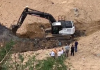
The recent explosion at the Ibar-Lepenac canal has disrupted daily life in Northern Kosovo and ignited a heated political debate. Notably, Selim Pacolli, a senior member of the New Kosovo Alliance (AKR), called for a new “Operation Storm” and advocated for a “cleansing of the terrain.”
He also accused the Serbian Orthodox Church (SOC) of being the “main instigator” of violence against Albanians. Remarks about ‘Operation Storm’ have been met with strong criticism from Serbian Democracy leader Aleksandar Arsenijević, who described them as “an open call for ethnic cleansing” and hate speech.
The Diocese of Raška-Prizren also voiced grave concern, warning of the dangerous implications of Pacolli’s accusations.
A Call for „Operation Storm“
In the aftermath of the canal explosion, Pacolli took to social media to advocate for what he termed the „concept of ‘Operation Storm.’“ Referring to the 1995 Croatian military campaign that resulted in the displacement of around 200,000 Serbs, Pacolli wrote:
„Here, only the concept of ‘Operation Storm’ works. A classic cleansing of the terrain. Otherwise, this evil will always follow us.“
Pacolli’s words immediately resonated with some online users, who echoed his call for drastic measures. Comments on his post included statements such as “Kosovo must once and for all cleanse itself of Serbian criminal filth” and “The only solution is definitive cleansing—‘RKS Operation Storm 2024.’”
However, his remarks also drew condemnation, with critics accusing him of inciting violence and hate. “This is madness,” one commenter said.
Reactions to Pacolli’s Rhetoric
Aleksandar Arsenijević, leader of the Serbian Democracy party, described Pacolli’s comments as „a direct call for ethnic cleansing and hate speech.“ He urged the international community to respond decisively.
„Such rhetoric is not only dangerous but unacceptable in a region where the wounds of past conflicts remain fresh. Silence in the face of such statements amounts to complicity,“ Arsenijević declared.
Pacolli, in his defense, has argued that his call for “cleansing” is aimed solely at „Serbian paramilitary bands“ and not at Kosovo Serbs who recognize Kosovo’s independence. He further claimed that such measures were necessary for peace and stability, drawing a controversial comparison to Croatia’s current harmony.
„Do you know why Croatia lives in peace and harmony with all its residents, regardless of their ethnicity, while Bosnia and Kosovo still live in fear and insecurity 25 and 30 years later?“ he asked.
SOC as „Instigator of Violence“ Against Albanians
In a subsequent post, he accused the Serbian Orthodox Church (SOC) of being a historical „instigator of violence“ against Albanians.
„Historically, it was precisely on Orthodox holidays that these Chetnik formations and gangs killed, cut, and burned us, with the Serbian Orthodox Church as the main instigator and scriptwriter,“ he wrote, referencing claims from Pristina media about alleged “warning from a young Serb” that the “Chetnik resistance” was responsible for the canal explosion, with the message “Christmas is Coming.”
In a short statement for KoSSev, the Raška-Prizren Diocese expressed deep concern over Pacolli’s accusations, warning that such rhetoric exacerbates already strained inter-ethnic relations.
Reactions have been notably absent from the top authorities in both Belgrade and Pristina.
Preuzimanje i objavljivanje tekstova sa portala KoSSev nije dozvoljeno bez navođenja izvora. Hvala na poštovanju etike novinarske profesije.